
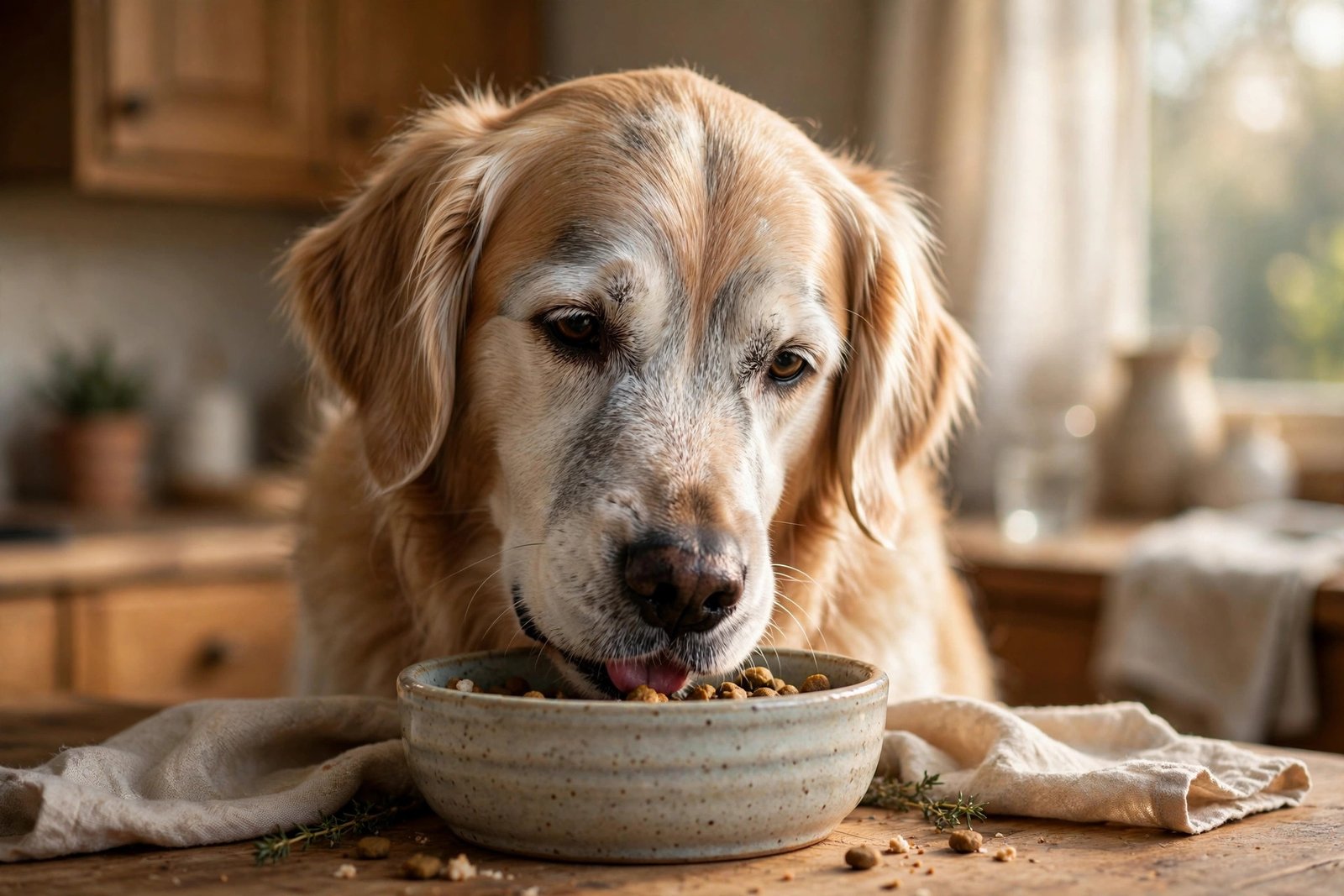
As dogs age, their bodies need fewer calories but the same high-quality nutrition. The best dog food for old dogs is easy to chew, rich in digestible protein, moderate in fat, high in fiber, and fortified with joint-supporting nutrients like glucosamine and omega-3 fatty acids. In this guide, you’ll learn exactly how your senior dog’s nutritional needs change, what to look for on a dog food label, and how to build the perfect bowl for your aging best friend.
How an Old Dog’s Nutritional Needs Change
An old dog is not just a younger dog with grey fur. Around the senior years, a dog’s metabolism slows down, activity levels drop, and the digestive system becomes less efficient. These changes reshape what should go into the bowl:
Fewer calories, same nutrition. Senior dogs typically need 20–30% fewer calories than they did in their prime, because they move less and burn energy more slowly. But cutting calories must never mean cutting nutrition — every bite still needs to deliver complete, balanced nourishment.
Protein stays important. There is a stubborn myth that old dogs need low-protein diets. In reality, healthy senior dogs need just as much — if not more — high-quality, easily digestible protein to maintain muscle mass, which naturally declines with age. Look for named animal proteins (chicken, turkey, salmon, lamb) at the top of the ingredient list.
Fiber helps aging digestion. Older digestive tracts move more slowly, which can lead to constipation. A diet with adequate fiber from sources like sweet potato, pumpkin, brown rice, and beet pulp keeps things moving comfortably.
Joints need support. Arthritis and stiff joints are among the most common complaints in old dogs. Foods fortified with glucosamine, chondroitin, and omega-3 fatty acids (from fish oil) help support joint health and keep your dog moving comfortably.
Teeth and gums change the texture equation. Dental disease is extremely common in senior dogs. Smaller, softer kibble — or a mix of wet and dry food — can make mealtimes far more comfortable for a dog with sore gums or missing teeth.
What to Look for in Dog Food for Old Dogs
When you stand in the pet food aisle (or scroll through endless options online), use this label checklist:
- An AAFCO nutritional adequacy statement. Look for wording like “formulated to meet the nutritional levels established by the AAFCO Dog Food Nutrient Profiles” — or better, a formula specifically designed for seniors.
- Named animal protein first. The first ingredient should be a specific meat or fish — “chicken,” “salmon,” “turkey” — not vague terms like “meat meal.”
- Moderate fat, around 10–15%. Old dogs need less fat than youngsters, but fat remains essential for energy, coat health, and vitamin absorption.
- Added fiber. Sweet potato, pumpkin, chicory root, or beet pulp signal digestive support.
- Joint-supporting nutrients. Glucosamine, chondroitin sulfate, and omega-3s (EPA/DHA from fish oil).
- Antioxidants. Vitamins C and E, plus blueberries and spinach, support the aging immune system.
- Kibble size and texture. Smaller, softer pieces are kinder to aging teeth.
- No unnecessary fillers. Avoid corn, wheat, soy, artificial colors and preservatives.
Wet vs. Dry Food for Old Dogs
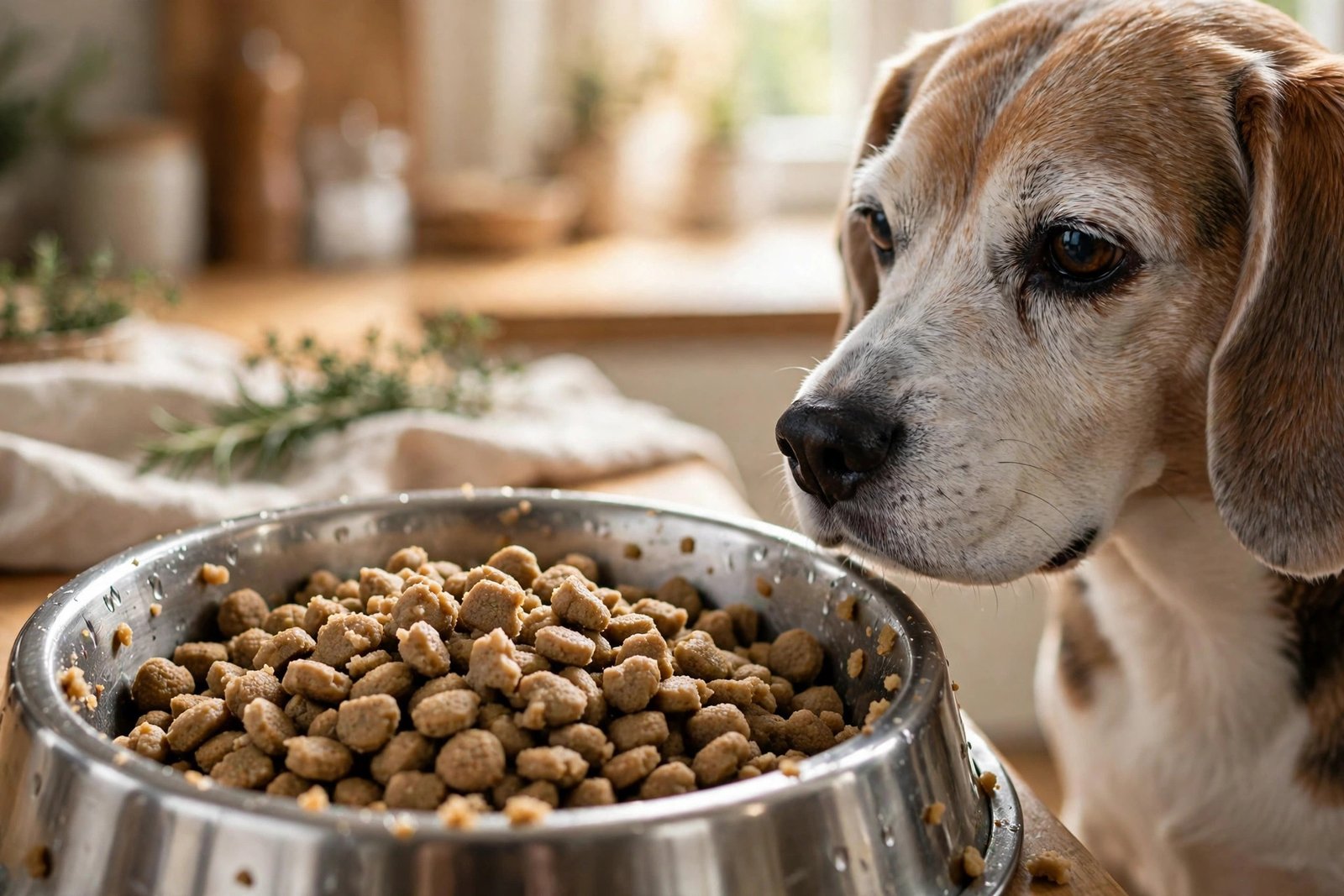
One of the most common questions owners ask is whether old dogs do better on wet or dry food. Both can work, and many seniors thrive on a combination.
Dry food (kibble) is convenient, economical, and the crunching offers mild dental benefits. For old dogs, choose a senior formula with smaller, softer kibble pieces.
Wet food (canned) has much higher moisture content — around 75–80% versus 10% in kibble. This is a real advantage for senior dogs, prone to dehydration and kidney issues. It’s softer, smellier (appetite-stimulating for picky old eaters), and easier to chew.
The best of both: a base of quality senior kibble topped with a spoonful or two of wet food. Your dog gets the benefits of kibble plus the moisture, aroma, and palatability of wet food.
How Much to Feed an Old Dog
Overfeeding is one of the biggest risks for senior dogs — extra weight puts painful stress on aching joints. Follow these principles:
- Start with the label, then adjust for your dog’s weight, body condition, and activity.
- Learn the body condition score: you should feel (but not prominently see) the ribs, with a visible waist from above.
- Two smaller meals beat one big one — easier on senior digestion.
- Weigh monthly. Gradual, unexplained weight loss in an old dog always warrants a vet visit.
- Treats count — keep them under 10% of daily calories.
Healthy Additions: What You Can Mix Into Their Bowl
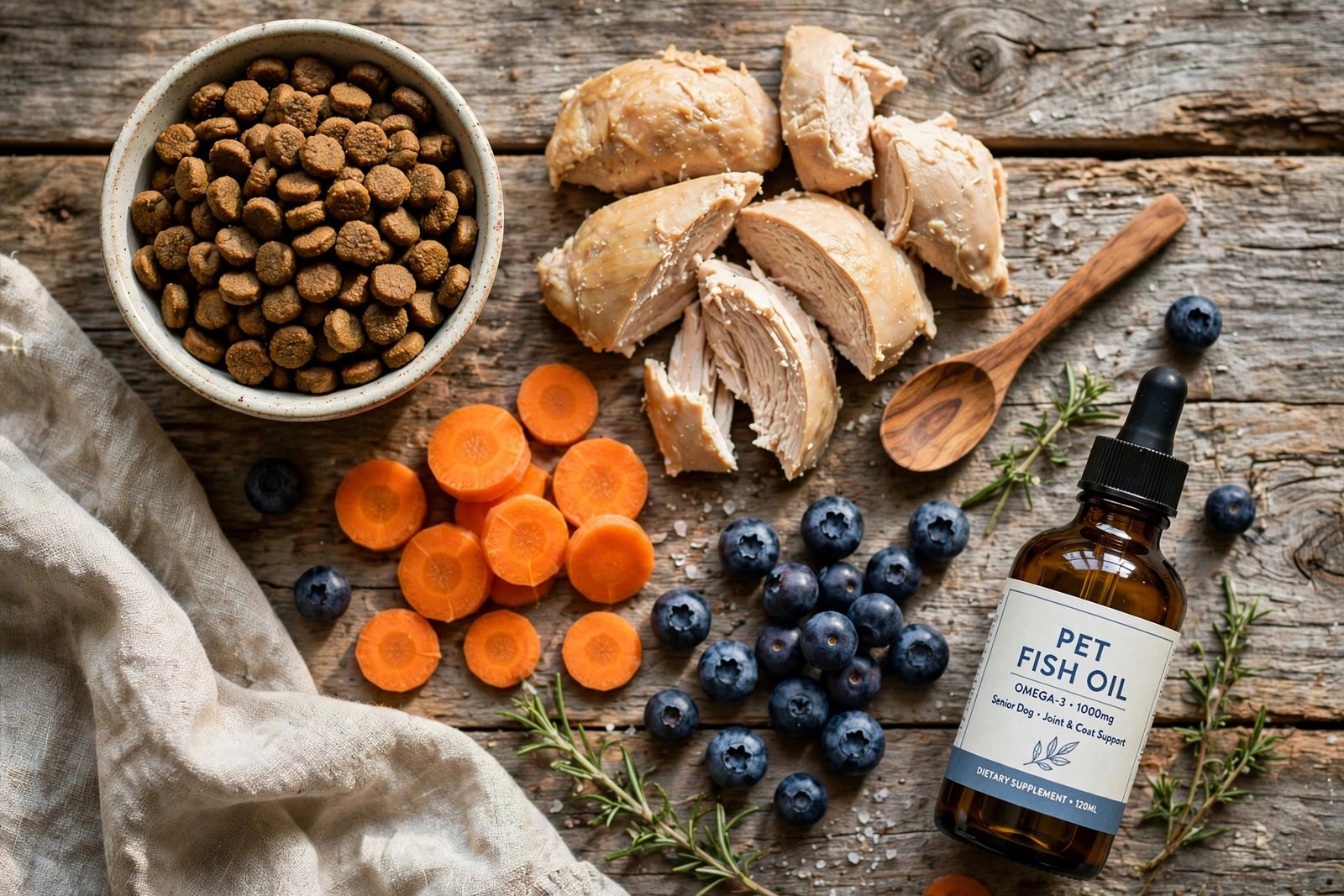
You don’t need an expensive prescription diet to boost your old dog’s bowl:
- A spoonful of plain canned pumpkin (not pie filling) — fiber for digestion
- Blueberries — antioxidant-rich and most dogs love them
- Cooked, unseasoned chicken or turkey — extra lean protein
- Steamed carrots or green beans — low-calorie crunch and fiber
- A drizzle of fish oil — omega-3s for joints, skin, and coat (ask your vet for the dose)
- Plain cooked sweet potato — gentle fiber and vitamins
Introduce new additions gradually over several days. Skip anything seasoned, oniony, garlicky, or sweetened.
Foods to Avoid for Old Dogs
- Chocolate, grapes, raisins, onions, garlic, and xylitol — all toxic to dogs
- Fatty table scraps — can trigger pancreatitis, which hits seniors harder
- Bones that splinter — cooked bones especially; aging teeth crack easily
- Excessive salt — hard on older hearts and kidneys
- Spoiled food — senior immune systems handle bacteria poorly
Signs Your Old Dog’s Diet Isn’t Working
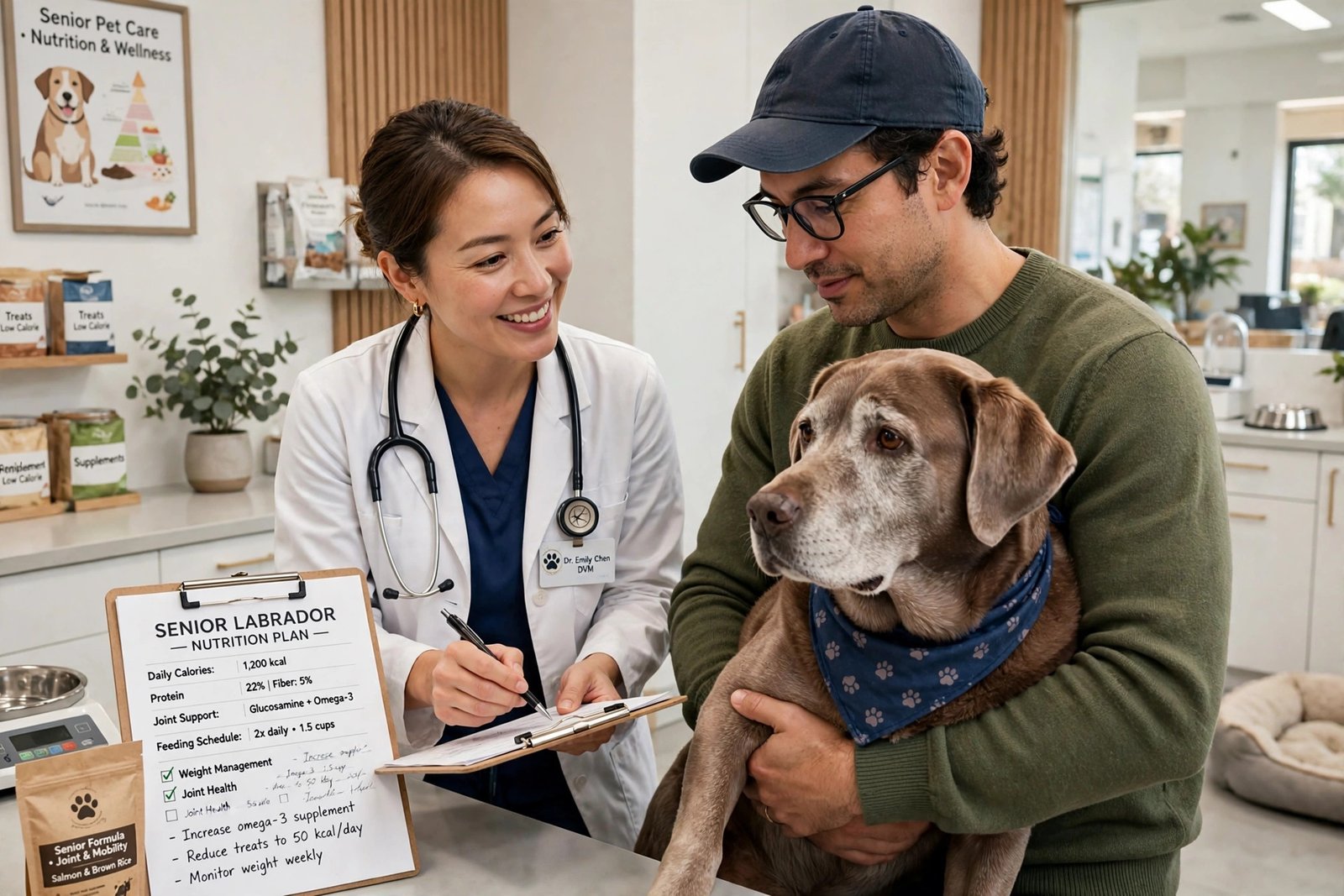
The right food should show results within 4–6 weeks: steady energy, healthy coat, firm stools, stable weight. Call your veterinarian if you notice gradual weight change, dull flaky coat, chronic digestive issues, or appetite changes. Increased thirst with weight loss is a classic early sign of kidney disease or diabetes in seniors. Transition foods gradually over 7–10 days.
Frequently Asked Questions
Do old dogs really need senior dog food?
Not every old dog strictly requires a “senior” label, but most benefit from one — controlled calories, joint support, extra fiber, softer textures. If your dog thrives on adult food and your vet is happy, there’s no emergency.
Can I feed my old dog regular adult dog food?
You can, but watch calories — standard adult formulas suit moderately active dogs, so a less-active senior may gain weight. Feed slightly less and consider a joint supplement with vet guidance.
How often should I feed an old dog?
Twice a day is ideal — morning and evening. Very old or tiny dogs may do better with three smaller meals. Avoid free-feeding; tracking appetite changes helps catch illness early.
Should old dogs eat wet or dry food?
Either works; a mix is often ideal. Wet adds moisture and palatability; dry is economical. For dental issues, lean wetter and softer.
When should I switch my dog to senior food?
Around age 7 for large breeds, 9–10 for small breeds (larger dogs age faster). Go by your dog — slowing down, weight gain, or stiff joints are cues. Ask your vet at the next checkup.
This article is for informational purposes only and is not a substitute for professional veterinary advice. Always consult your veterinarian before making significant changes to your senior dog’s diet, especially if your dog has a diagnosed health condition.