Table of Contents
One day your dog is stealing socks and bouncing off the furniture. The next, he’s hesitating at the stairs and napping through the afternoon. It sneaks up on you — and then the question hits: wait, is my dog a senior now?
If you’re wondering when is a dog considered a senior, here’s the short answer: most dogs earn the “senior” label somewhere between 7 and 10 years old, but the real number depends almost entirely on your dog’s size. A Great Dane can be a senior at 6. A Chihuahua at 6 is barely middle-aged.
This guide breaks it all down — the senior age chart by breed size, what vets actually mean by “senior,” the signs to watch for, and what should change in your dog’s care once he’s officially in the golden-years club.
It’s a question worth getting right, by the way. Knowing when your dog crosses into senior territory isn’t about labeling him “old” — it’s about timing the care upgrades (vet visits, food, exercise tweaks) that keep him healthier for longer. Get the timing right and you can add genuinely good years to his life.

When Is a Dog Considered a Senior? The Short Answer
There’s no single birthday when every dog becomes a senior. Dogs age at wildly different rates, and size is the biggest factor. Big dogs live shorter lives and age faster; small dogs take their sweet time.
As a rough rule of thumb that most vets use:
- Small breeds (under 20 lbs): senior around 10–12 years
- Medium breeds (20–50 lbs): senior around 8–10 years
- Large breeds (50–90 lbs): senior around 7–8 years
- Giant breeds (90+ lbs): senior as early as 5–6 years
So if you’ve got a 9-year-old Beagle, congratulations — you’ve got a senior on your hands. If your 9-year-old is a Shih Tzu, he’s probably still in his prime.
But these are averages, not laws. Genetics, weight, diet, and plain luck all play a role. An overweight Labrador will hit “senior” faster than a lean one. That’s why vets look at the whole dog, not just the birth certificate.
Senior Dog Age Chart by Breed Size
So how old is a senior dog, exactly? Here’s a practical chart based on widely used veterinary guidelines. Find your dog’s size, and you’ll see the approximate age ranges for each life stage:
| Breed size | Weight | Adult | Senior | Common examples |
|---|---|---|---|---|
| Small / Toy | Under 20 lbs | 1–10 yrs | 10+ yrs | Chihuahua, Dachshund, Shih Tzu, Yorkie |
| Medium | 20–50 lbs | 1–8 yrs | 8–10 yrs | Beagle, Cocker Spaniel, Border Collie |
| Large | 50–90 lbs | 1–7 yrs | 7–8 yrs | Labrador, Golden Retriever, German Shepherd |
| Giant | 90+ lbs | 1–5 yrs | 5–6 yrs | Great Dane, Mastiff, Saint Bernard |
Keep in mind these are approximations. Mixed breeds fall somewhere in between — a 40-pound mutt with some Lab in him probably follows the medium-to-large timeline. If you don’t know your dog’s breed mix at all, go by adult weight: it’s the most reliable single predictor of how fast a dog ages. When in doubt, your vet can give you a much better read based on your individual dog’s health, weight, and breed mix.
One more thing worth knowing: the jump from “adult” to “senior” isn’t a cliff. Dogs go through a “mature” middle phase first, where you might notice small changes — a little less stamina on long walks, a little more interest in the couch, a new habit of choosing the sunny spot over the play session. The senior label just marks the point where proactive care starts paying real dividends, so think of it as a nudge rather than a verdict.
What Is Considered a Senior Dog? The Vet’s Definition
Pet owners tend to think in birthdays. Vets think in life stages — and their definition is a bit more precise.
The American Animal Hospital Association (AAHA) defines a senior dog as one in roughly the last 25% of its expected lifespan. That’s the technical answer to what is considered a senior dog: it’s not a fixed age, it’s a proportion of how long your dog is expected to live. A breed expected to live 12 years enters the senior stage around 9. A breed expected to live 8 years gets there around 6. You can read more about how AAHA frames senior pet care in their senior pet resources.
Why does this definition matter more than a simple age cutoff? Because it ties the label to biology, not the calendar. Two 8-year-old dogs can be in completely different life stages. The 8-year-old Great Dane is deep into his senior years. The 8-year-old Dachshund is just getting started.
Your vet will also factor in things no chart can capture: dental health, joint condition, organ function, and muscle tone. A dog with early arthritis at 7 might get the senior treatment plan before a spry 9-year-old of the same breed. The label is a starting point for better care, not a diagnosis.

Why the Senior Label Actually Matters
Okay, so your dog is officially a senior. Does anything actually change? Yes — and this is the part most owners miss. The “senior” label isn’t about sentimentality. It’s a signal to adjust three things: vet visits, nutrition, and daily routines.
Vet checkups go from yearly to twice a year. This is the single biggest change. Dogs age faster than we do, so a lot can shift in twelve months. AAHA recommends senior dogs get a full wellness exam once or twice a year, often with blood work and a urine test to catch kidney, liver, or thyroid issues early. Catching things early in a senior dog isn’t just nice — it’s often the difference between a manageable condition and a crisis.
Food needs a second look. Senior dogs generally need fewer calories (slower metabolism, less zooming around) but the same — or even more — high-quality protein to protect aging muscles. Many owners switch to a senior-formula food around the time their dog hits senior status. It’s not mandatory on day one, but it’s a conversation worth having with your vet.
Weight becomes critical. Extra pounds on a senior dog aren’t just cosmetic. They pile stress onto already-aging joints and organs. If anything, the senior years are when keeping your dog lean matters most.
None of this is scary stuff. It’s just maintenance — like switching to a slightly different service schedule for a car with some miles on it. The goal is the same: more good years together.
7 Signs Your Dog Is Entering the Senior Years
Your dog won’t announce his senior status with a press release. But he’ll drop hints. Here are the most common ones:
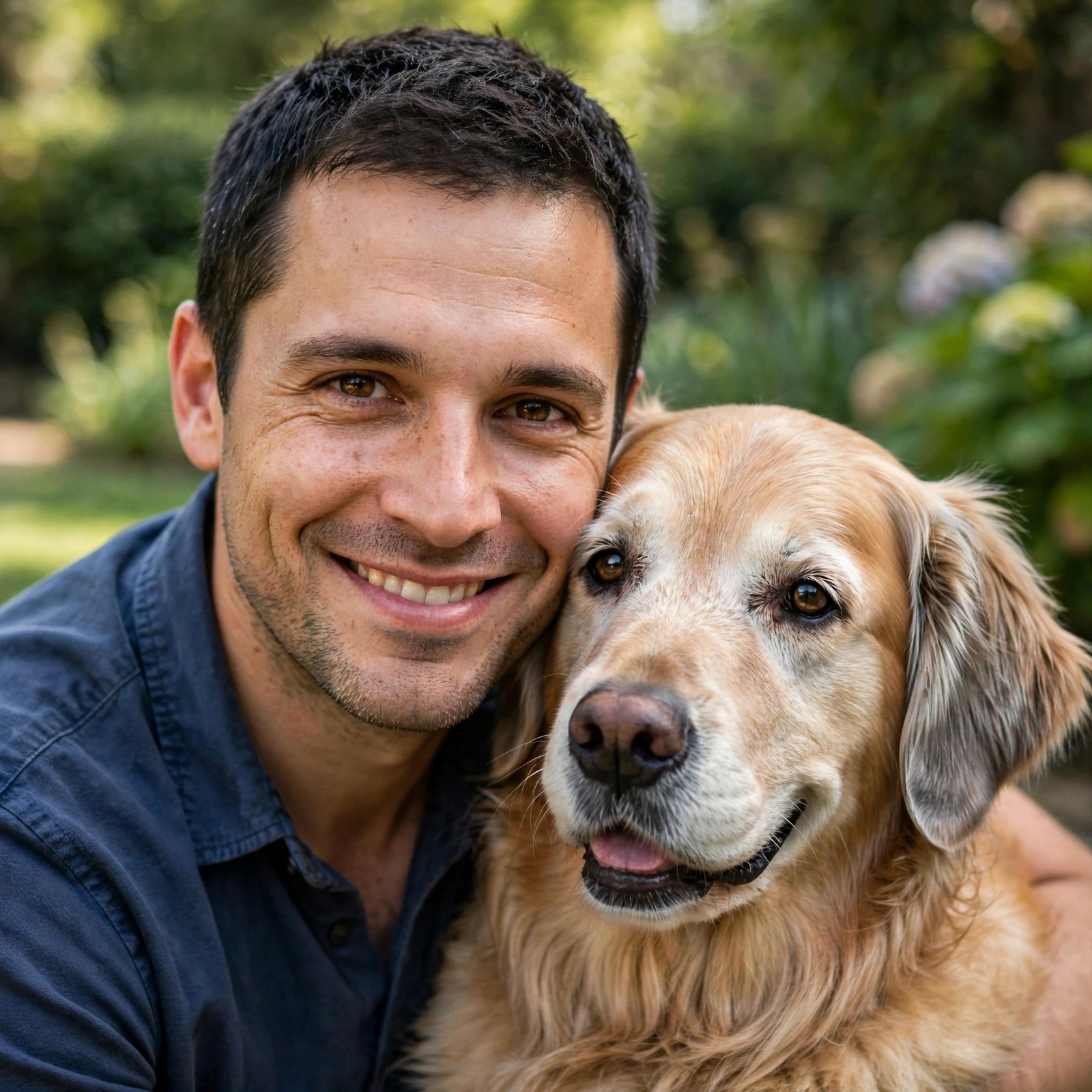
1. The grey muzzle. The classic. White or grey hairs creeping in around the muzzle, eyes, and paws. It’s cosmetic, but it’s usually the first visible sign.
2. Slowing down. Shorter bursts of energy. The frisbee gets chased once instead of ten times. Longer naps, deeper naps — the kind where you have to check if he’s still breathing (he is, he’s just really comfortable).
3. Stiffness, especially in the morning. If your dog takes a minute to “warm up” after getting up, or hesitates before jumping into the car, his joints are talking to you. This is one of the earliest and most important signs.
4. Changes in eyesight and hearing. A bluish haze in the eyes (often just normal aging, called nuclear sclerosis), bumping into furniture in dim light, or not responding when called from another room.
5. Weight shifts. Some seniors gain weight as activity drops. Others lose muscle mass and look thinner despite eating the same amount. Both deserve a vet’s attention.
6. More drinking, more peeing. Increased thirst and urination can be normal aging — or an early flag for kidney issues or diabetes. Don’t guess; get it checked.
7. Behavior changes. More clingy, more anxious, or a little confused in familiar places. Some of this is normal cognitive aging. If it’s pronounced — getting stuck in corners, forgetting housetraining — talk to your vet about canine cognitive dysfunction.
Notice a few of these? Don’t panic. But do book that vet visit. Early awareness is the whole game with senior dogs.

What Changes Once Your Dog Is Officially a Senior
So the grey muzzle is here, the vet has confirmed it — your dog is a senior. Here’s your practical checklist of what to actually do differently:
Switch to twice-yearly vet visits. We covered this above, but it bears repeating because it’s the highest-impact change you can make. Blood work once a year (or as your vet recommends) gives you a baseline to spot trends before they become problems.
Rethink the food bowl. Talk to your vet about whether a senior formula makes sense. Look for foods with quality animal protein, moderate fat, and joint-supporting extras like glucosamine or omega-3s. And measure portions — “eyeballing it” gets riskier as metabolism slows.
Adjust exercise, don’t cancel it. Senior dogs still need to move — it keeps joints lubricated, muscles strong, and minds sharp. Just swap the hour-long hike for two gentle 20-minute walks. Swimming is fantastic for seniors if you have access to it: all the workout, none of the joint pounding. Watch your dog, not the clock. If he’s lagging, you’re done for the day.
Make the house senior-friendly. Non-slip rugs on hardwood floors. A ramp or steps for the couch and car. A proper orthopedic bed instead of the thin old one. These small changes prevent the slips and strains that can really set an older dog back.
Stay on top of dental care. Dental disease is rampant in older dogs and it’s not just about bad breath — it can seed infections elsewhere in the body. Annual dental checkups and regular at-home brushing (or dental chews if brushing is a battle) are worth the effort.
Watch the weight like a hawk. Weigh your dog monthly if you can. Senior weight creep is sneaky, and every extra pound makes arthritis worse. Your vet can tell you your dog’s ideal range — aim for the lean side of it.
None of this requires a lifestyle overhaul. It’s a series of small, sensible tweaks that add up to a more comfortable dog.
Quick Answers to Common Questions
What age is considered senior dog for a Labrador?
Labradors are a large breed, so most vets consider them senior around 7 to 8 years old. A lean, healthy Lab might act young well past that, but 7–8 is when senior screening and diet conversations should start.
Is 7 years old for a dog?
For a large or giant breed, yes — 7 is solidly senior territory. For a small breed, 7 is more like late middle age. Size really is everything here.
Do small dogs really age slower?
They do. Small breeds tend to live longer and reach senior status later — often not until 10 or beyond. Scientists aren’t entirely sure why, but the pattern is consistent across studies: the bigger the dog, the faster the aging clock ticks.
My dog is 6 and already slowing down. Is that normal?
It can be, especially for giant breeds — a 6-year-old Great Dane is legitimately a senior. For smaller dogs, noticeable slowing at 6 is worth a vet check to rule out pain, thyroid issues, or other treatable causes. Don’t just chalk it up to age without asking.
Does the senior label mean my dog is “old”?
Not the way you’re thinking. “Senior” in vet terms means “entering the life stage where proactive care matters most.” Plenty of senior dogs are happy, active, and full of personality for years. The label is about care, not a countdown.
Should I switch to senior dog food as soon as my dog hits senior age?
Not necessarily on the exact birthday. The senior label is your cue to have the conversation, not an automatic food swap. Some dogs do great on their adult food for another year or two, especially if they’re lean and active. What matters is matching the food to the dog in front of you: steady weight, good muscle tone, solid energy. If any of those start slipping, that’s your signal — with your vet’s input — to make the switch.
The Bottom Line
So, when is a dog considered a senior? For most dogs, somewhere between 7 and 10 — earlier for the big guys, later for the little ones. But the exact birthday matters less than what you do with the information.
The senior label is really just your vet’s way of saying: “Let’s pay a little closer attention from here on out.” Twice-yearly checkups, a diet that fits an older metabolism, gentler exercise, and a close eye on the small changes — that’s the whole playbook. Do that, and you’re giving your old friend the best possible shot at a long, comfortable senior chapter.
He’s been there for your hardest days without asking for anything. The grey muzzle years are your turn to return the favor.