
Table of Contents
If your old dog has started walking away from a full bowl of kibble, you’re not imagining it — and it’s probably not just pickiness. As dogs age, chewing gets harder, their sense of smell fades, and
food that used to excite them just doesn’t do it anymore. That’s exactly where canned food earns its keep.
Finding the best canned dog food for senior dogs isn’t about grabbing the priciest can on the shelf, though. It’s about understanding what an aging dog’s body actually needs — softer textures, the right protein levels, enough moisture — and reading labels with a skeptical eye. This guide walks through all of it: why wet food suits seniors, what to look for (and what to skip) on the label, how to switch foods without upsetting an old stomach, and answers to the questions I hear most from fellow senior-dog owners.
If you’re still figuring out the bigger picture of senior nutrition, start with our guide to choosing the right diet for your old dog — it covers the fundamentals this article builds on.
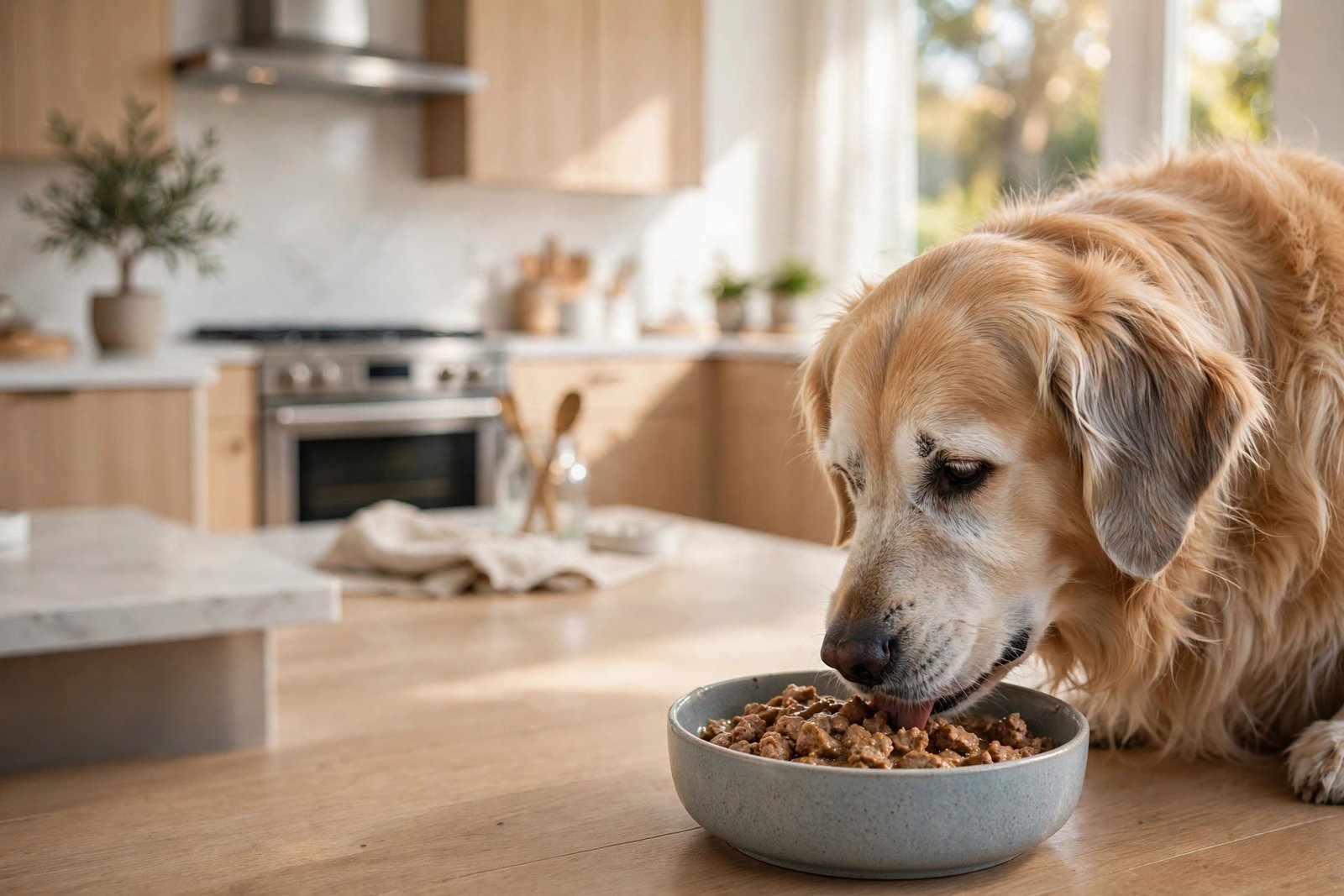
Why Wet Food Often Works Better for Older Dogs
Dry kibble is convenient, no question. But convenience stops mattering much when your dog can’t — or won’t — eat it. Here’s why so many owners of aging dogs end up switching to the best wet dog food for senior dogs they can find.
It’s kinder to aging teeth and gums
By the time a dog hits their senior years, dental wear is the norm, not the exception. Worn teeth, receding gums, the occasional extraction — chewing hard kibble can genuinely hurt. A soft pâté or minced texture lets a dog with a sore mouth eat comfortably, which matters enormously, because a senior dog that skips meals loses weight fast, and weight loss in old dogs is always a worry.
You don’t need to guess about this one. If your dog chews on one side, drops kibble, or takes forever to finish a meal they used to inhale, their mouth is telling you something.
It sneaks in extra hydration
Older dogs are more prone to dehydration, partly because their kidneys don’t concentrate urine as efficiently as they used to, and partly because some seniors just don’t drink enough water. Canned food is typically 75–80% moisture compared to kibble’s ~10%. That extra water adds up across two meals a day, and for a dog with borderline kidney function, every bit of hydration helps. It won’t fix a medical problem, but as a daily habit, it’s one of the easiest wins in senior dog nutrition.
Smell and taste bring back appetite
A dog’s sense of smell dulls with age, and smell drives appetite. Wet food simply smells stronger than dry — especially if you warm it slightly (ten seconds in the microwave, stirred well, never hot). I’ve watched disinterested seniors perk up at a warmed bowl of wet food after ignoring the same meal served cold from the fridge. For the many older dogs whose appetite fades, aroma is half the battle.
What to Look for on the Label
The can aisle is overwhelming, so here’s how to narrow it down. Flip the can around — the front is marketing, the back is information.
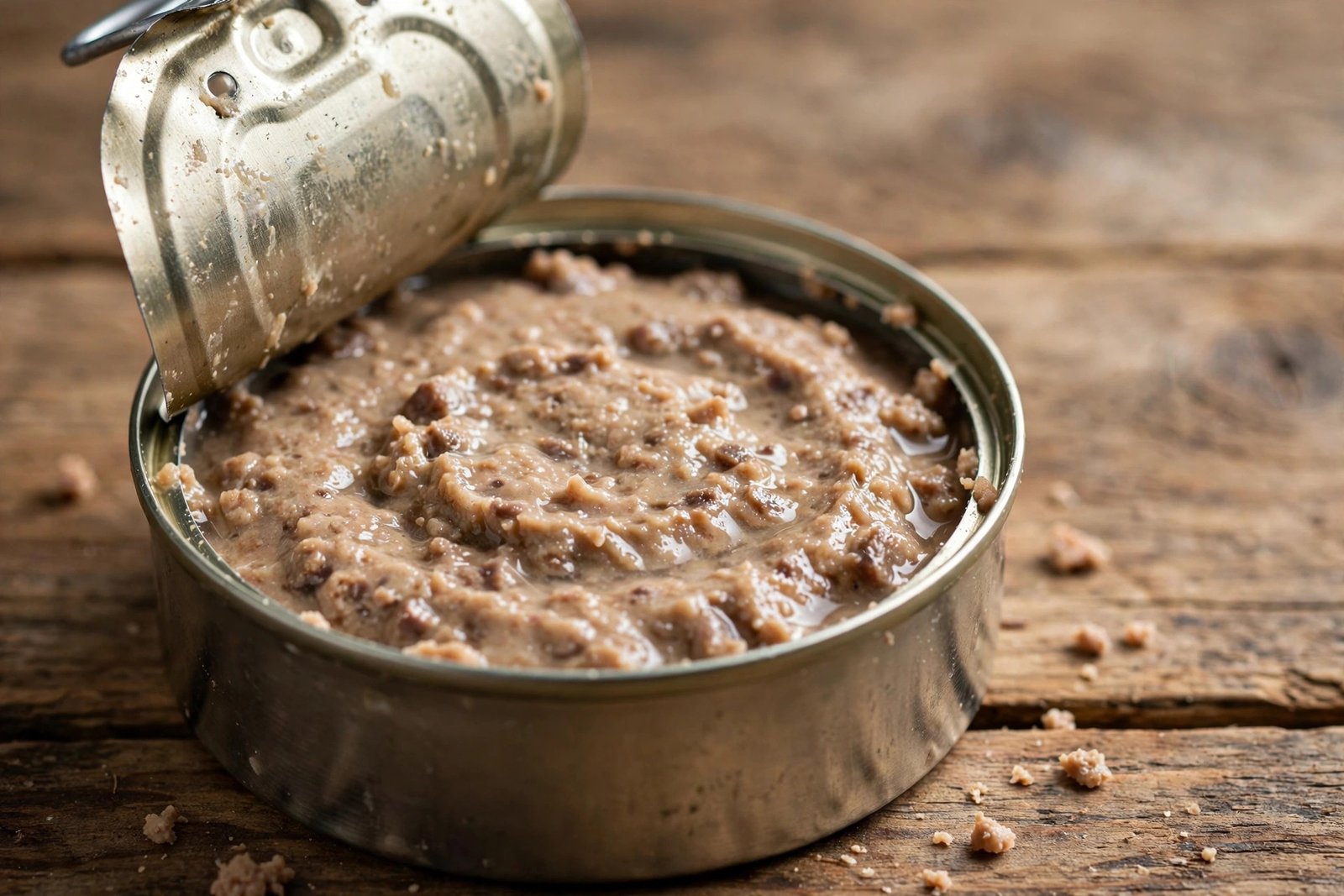
“Complete and balanced” actually means something
Look for a statement that the food meets AAFCO nutrient profiles for adult maintenance or all life stages. AAFCO — the Association of American Feed Control Officials — sets the baseline nutritional standards pet foods are formulated against, and that little statement is your guarantee the food isn’t missing something essential. If a canned food lacks it (some “toppers” and “complements” do), it’s meant to be mixed with a complete food, not served alone.
Protein still matters — don’t fall for “low protein for seniors”
There’s a persistent myth that old dogs need low-protein diets. For healthy seniors, the opposite is closer to the truth: aging dogs need enough high-quality protein to maintain muscle mass, which they lose faster than younger dogs. Look for a named meat, poultry, or fish as the first ingredient — “chicken,” “beef,” or “salmon,” not vague terms like “meat by-products” or “animal digest.” If your dog has a diagnosed kidney condition, protein needs change, but that’s a conversation for your vet, not a label decision.
Fat, fiber, and the stuff that keeps digestion moving
Senior formulas often run slightly lower in fat (older dogs are usually less active) and include a bit more fiber for digestive regularity. Neither needs to be extreme — you’re looking for balance, not a prescription diet. A food that’s dramatically low-fat can leave an already-thin senior looking gaunter, so match the food to your dog’s body condition, not just their age.
Ingredients worth skipping
You don’t need to memorize a blacklist, but a few red flags are worth knowing: artificial colors (they’re for you, not the dog), added sugars or sweeteners, and generic “flavors” with no named source. None of these are doing your senior any favors. A short, recognizable ingredient list is usually — not always, but usually — a good sign.
Canned vs. Other Soft Options
Canned food isn’t the only soft game in town, so let’s put it in context. When people search for the best soft dog food for senior dogs, they’re usually comparing a few formats:
- Pâté/loaf (canned): the softest option, easiest for sore mouths. Also the easiest to mash further with a fork if needed.
- Chunks in gravy (canned): softer than kibble but requires a bit more chewing than pâté. Great for dogs transitioning off dry food who still like texture.
- Fresh refrigerated rolls: very soft, often excellent palatability, but pricier and spoil faster once opened.
- Soaked kibble: a budget compromise — soak your dog’s current kibble in warm water for 10–15 minutes. It works, though it never gets as soft or aromatic as true wet food.
For most seniors with dental issues or poor appetite, a quality canned pâté is the sweet spot of softness, nutrition, and cost. And if you’re comparing across formats, our roundup of the best dog foods for older dogs covers dry, soft, and mixed options side by side.
How to Transition Your Senior Dog to Wet Food
Old stomachs are set in their ways. Switching cold turkey is the fastest route to digestive upset, so take it slow — slower than you would with a young dog.

Days 1–3: Mix about 25% canned food into 75% of the current diet.
Days 4–6: Go 50/50.
Days 7–10: Shift to 75% canned, 25% old food.
Day 10+: Full switch, if stools have stayed normal throughout.
Watch the stool — it’s the most honest feedback you’ll get. Soft but formed is fine during transition; watery or bloody is not, and that’s a vet call, not a “wait and see.” Also watch energy and appetite: a dog that eats eagerly and holds weight is telling you the switch worked.
One practical tip: serve wet food at room temperature or slightly warmed, and don’t leave it sitting out. Unlike kibble, an opened bowl of wet food shouldn’t sit for more than a couple of hours — bacteria love it as much as your dog does.
How Much Canned Food Does a Senior Dog Need?
This is where labels get you closest to an answer, and your vet gets you the rest of the way. Start with the feeding guide on the can, then adjust based on your dog’s body condition. The goal for most seniors is to maintain a healthy weight — you should be able to feel (not see) the ribs, and there should be a visible waist when viewed from above.
A few senior-specific wrinkles:
- Less active dogs need fewer calories. The 12-year-old who naps 20 hours a day doesn’t eat like the 8-year-old who still hikes. If weight creeps up, trim portions by 10% and reassess in two weeks.
- Underweight seniors are the bigger worry. If your old dog is losing weight despite eating, don’t just add more food — unexplained weight loss in a senior warrants a vet visit to rule out dental pain, organ issues, or other problems.
- Split into smaller meals. Two or even three smaller meals a day are easier on an aging digestive system than one big bowl.
Weigh your dog monthly if you can. Bathroom scales work fine — weigh yourself holding the dog, then without. Slow trends tell you more than any single weigh-in.
Storing Opened Cans Safely
A quick practical note, because this trips people up: once you open a can, don’t store the leftovers in the can itself. Transfer unused portions to a glass or plastic container with a lid, or at minimum cover the open can tightly with a silicone lid or wrap. Refrigerate immediately and use within 2–3 days — your nose is a decent judge here; if it smells off, it is.
Don’t freeze and thaw repeatedly, and never leave a served bowl sitting out all day. Wet food at room temperature becomes a bacterial playground after a couple of hours, and senior immune systems don’t need the extra challenge. Small cans or single-serve trays cost a bit more per ounce but waste less if your old dog eats lightly — worth doing the math for your situation.
Frequently Asked Questions
Is canned food better than dry food for senior dogs?
For many seniors, yes — mainly because of softness, moisture, and aroma. But “better” depends on the individual dog. A senior with great teeth and a healthy appetite can do perfectly well on quality kibble. Canned food shines brightest for dogs with dental problems, poor appetite, or a need for extra hydration. Plenty of owners land in the middle with a mix of both.
Can I mix wet and dry food for my senior dog?
Absolutely, and it’s one of the most popular approaches. A common split is half and half, or kibble topped with a generous spoonful of wet food for palatability. Just remember to reduce the total amount so you’re not double-feeding — add the calories together, don’t just add a second meal.
How long does opened canned dog food last in the fridge?
Cover it and refrigerate, and use it within 2–3 days. Don’t serve it straight from the fridge if your dog is fussy — let it come to room temperature or warm it gently. And never microwave it in the can; transfer to a bowl first.
Is canned food bad for dogs’ teeth?
This one comes up a lot. The honest answer: kibble’s “teeth-cleaning” effect is mostly overstated — most dogs swallow kibble nearly whole. Neither food type replaces dental care. If you’re worried about teeth, regular brushing (even a few times a week) and vet dental checkups matter far more than wet versus dry.
Should I choose a “senior” formula or just any adult canned food?
A formula designed for seniors (or all life stages, fed appropriately) is the safer bet, since it’s calibrated for an older dog’s needs. That said, the individual food matters more than the label on the front — a high-quality adult pâté with the right protein and moisture can serve a senior beautifully. Judge the back of the can, not the front.

The Bottom Line
The best canned dog food for senior dogs is the one your old dog will actually eat, that keeps weight steady, and that lists real ingredients with an AAFCO complete-and-balanced statement. Start with a soft pâté texture, transition slowly, watch the body condition, and warm it up a little — you’d be surprised how far that goes.
Senior dogs ask so little of us in the end: a soft place to sleep, a bowl they can manage, and us, nearby. Getting the food right is one of the kindest things you can do for the years they have left.
1 thought on “Best Canned Dog Food for Senior Dogs: What Actually Matters When Kibble Gets Hard”