Table of Contents
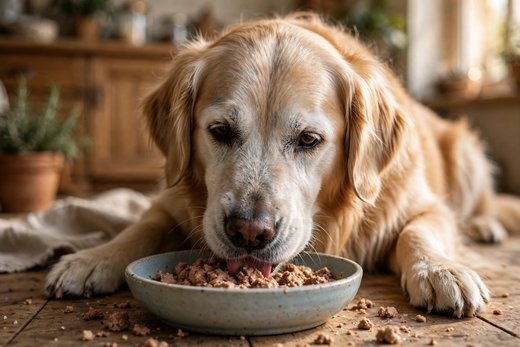
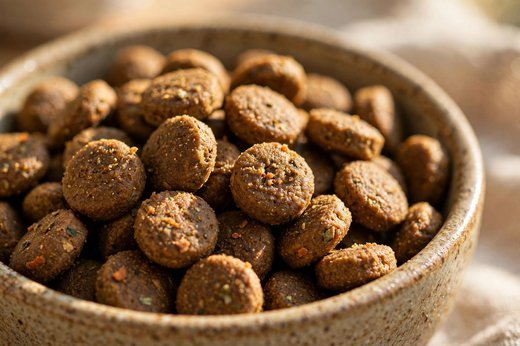
There comes a day with every old dog. You set down the same bowl of kibble he’s eaten happily for years, and he just… stares at it. Maybe he nudges a piece around with his nose. Maybe he tries one bite, winces, and walks away. And you stand there in the kitchen wondering what changed.
Usually, it’s his mouth. Teeth get sore, gums get tender, and that crunchy kibble that was never a problem suddenly feels like chewing gravel. The good news? Switching to a soft dog food for senior dogs is one of the simplest, kindest changes you can make — and most older dogs take to it immediately.
This guide walks you through why it happens, which soft foods actually work, what to check on the label, and how to make the switch without upsetting his stomach.
Why Your Old Dog Suddenly Hates His Kibble
It’s rarely stubbornness. When a senior dog starts refusing hard food, there’s almost always a physical reason behind it. Here are the usual suspects:
Dental disease. This is the big one. Studies show that the vast majority of dogs over the age of three have some degree of periodontal disease, and it only gets worse with age (Cornell’s veterinary school has a good overview of how it develops). Plaque builds up under the gumline, gums get inflamed, and eventually teeth loosen or fall out. Imagine trying to crunch dry biscuits with a sore tooth — you’d skip dinner too.
Missing or worn teeth. Even without active disease, years of chewing wear teeth down. Some seniors have had extractions. Fewer working teeth means kibble becomes genuinely hard work.
Sore gums and mouth pain. Gingivitis, small sores, or a cracked tooth can make every bite sting. Dogs are stoic — they won’t cry about it. They’ll just quietly stop eating.
Fading sense of smell. Here’s one people forget: dogs decide food is delicious mostly by smell. As that sense dulls with age, dry kibble — which was never very aromatic — becomes downright boring. Soft foods, especially warm ones, release far more aroma. That’s why an old dog who “isn’t hungry” will suddenly inhale a bowl of warmed wet food.
General appetite decline. Some seniors just eat less enthusiastically. Softer, smellier, more interesting food can coax them back to the bowl, which matters because under-eating in old dogs leads to muscle loss fast.
If your dog has started dropping kibble, chewing on one side, drooling more than usual, or has noticeably bad breath, don’t just switch foods and hope — get his mouth checked first. More on that later.
Types of Soft Dog Food for Senior Dogs: Pros and Cons
Not all soft food is created equal. Here’s an honest rundown of your options, so you can pick what fits your dog (and your budget).
1. Wet / canned food
The classic choice, and for good reason. When people ask about the best canned options for senior dogs, what they’re really asking is: which one will my old dog actually eat and thrive on?
Pros: Very soft and easy to eat — no chewing required. High moisture content (typically 75-80%) helps with hydration, which matters because older dogs are prone to kidney issues and often don’t drink enough. The strong smell is a huge appetite trigger for seniors with dull noses. Comes in pâté, chunks-in-gravy, and shredded textures so you can match what your dog prefers.
Cons: Costs more per calorie than kibble — sometimes a lot more, especially for big dogs. Once opened, it needs refrigeration and should be used within a couple of days. And fair warning: the smell that thrills your dog may not thrill you at 6 AM.
Best for: Dogs with significant dental problems, missing teeth, or poor appetite.
2. Kibble softened with water
Don’t overlook the simplest option: your dog’s current kibble, soaked. Add warm (not hot) water, wait 10-15 minutes until the pieces swell and soften, then serve. Some dogs prefer it mashed with a fork into a porridge-like consistency.
Pros: Cheapest route — no new food to buy. Keeps the exact nutrition your dog is used to, which means less digestive drama. You control the texture, from slightly softened to full mush.
Cons: Softened kibble spoils faster than dry, so don’t leave it sitting out all day. Some dogs turn up their noses at the texture — it’s a bit like soggy cereal, and not every dog is on board. It also doesn’t add the aroma boost that canned food does.
Best for: A first experiment before committing to a full diet change, or as a temporary bridge after dental work.
3. Fresh / gently cooked food
The refrigerated fresh-food brands (and careful home cooking — more on that below) fall into this category. These are soft by nature and usually very palatable.
Pros: Excellent palatability — most dogs go crazy for it. Soft texture throughout. Often made with recognizable whole ingredients, which some owners prefer.
Cons: The priciest option by a wide margin. Needs fridge or freezer space and careful handling. Portion sizes for large senior dogs can get expensive fast.
Best for: Picky seniors, dogs recovering from illness, or owners who want maximum palatability regardless of cost.
4. Semi-moist food
Those soft, chewy nuggets and rolls in pouches. They’re convenient and dogs tend to like them.
Pros: Soft, convenient, no refrigeration needed, and most dogs find them tasty.
Cons: This is the honest part — many semi-moist foods are high in sugars, humectants, and artificial colors to keep them soft and shelf-stable. Fine as an occasional topper, but I’d be cautious about making them his whole diet.
Best for: Toppers, treats, or tempting a dog who’s off his food — not as a dietary staple.
What to Look for on the Label
Switching to soft food doesn’t mean switching to less nutritious food. Senior dogs still need proper nutrition — arguably they need it more. Here’s what to check:
Protein, and plenty of it. Old dogs need more protein than young adults, not less, to hold onto muscle mass. Look for a named meat or fish as the first ingredient (chicken, beef, salmon — not “meat by-products” or vague “animal digest”). Aim for foods formulated for seniors or all life stages from reputable brands.
Moisture content. For canned food this is naturally high, which is a plus. But check that the food isn’t mostly water and gravy with very little actual nutrition — compare the guaranteed analysis, not just the marketing.
Texture that matches your dog’s mouth. Pâté is the softest and easiest — good for dogs with very few teeth. Chunks in gravy work if he can still gum food a bit. If you’re unsure, buy one small can of each texture and let him vote.
Fat levels. Senior formulas are often moderately lower in fat (older, less active dogs gain weight easily), but don’t go extremely low-fat unless your vet advises it — fat carries flavor, and flavor gets old dogs eating.
Joint support extras. Glucosamine, chondroitin, and omega-3 fatty acids (fish oil) are common in senior formulas and genuinely useful for stiff old joints. Nice bonus, not a dealbreaker.
What to avoid: Foods where sugar, corn syrup, or vague “flavors” appear high on the ingredient list. And be skeptical of anything marketed as “soft” that achieves it mainly through additives rather than real moisture.
When comparing canned options for senior dogs, ignore the pretty packaging and flip the can over — the ingredient list tells the real story in ten seconds.
How to Transition From Kibble Without the Tummy Trouble
Here’s where owners often go wrong: a full bowl of new food on day one, then diarrhea at 2 AM. Old digestive systems are sensitive — go slow.
Days 1-2: Mix about 25% new soft food with 75% of the old diet (softened, if his mouth needs it).
Days 3-4: Move to roughly 50/50.
Days 5-6: About 75% new food, 25% old.
Day 7+: Full switch, assuming stools have stayed normal.
Watch his stool, his energy, and his enthusiasm at mealtimes. A little softness in the stool during transition is normal; watery diarrhea, vomiting, or complete appetite loss is not — slow down or call your vet.
A few practical notes for the transition:
- Warm it slightly. Ten seconds in the microwave (stir well, check temperature) or a splash of warm water wakes up the aroma. Never serve it hot.
- Smaller, more frequent meals. Many seniors do better with three smaller meals than two big ones — easier on aging digestion.
- Don’t leave wet food out. Pick up uneaten soft food after 30-45 minutes and refrigerate leftovers. Bacteria love a warm bowl as much as your dog does.
- Keep water available. Even with high-moisture food, fresh water matters.
Homemade Soft Food: Lovely Idea, But Talk to Your Vet First
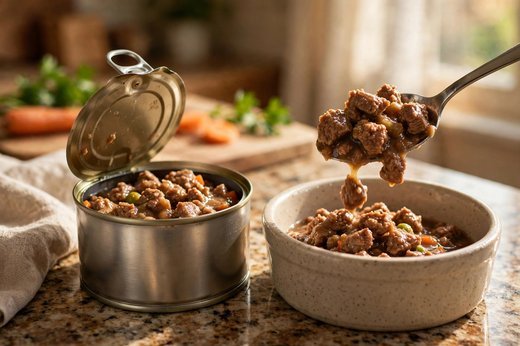
I get the appeal. You love your dog, you cook for your family — why not for him? And honestly, a simple home-cooked meal of boiled chicken, rice, and soft vegetables is fine as an occasional meal or topper.
But as a full-time diet, it gets risky: getting calcium, protein, fatty acids, and vitamins right in a home kitchen is genuinely hard, and months of an unbalanced diet can cause real deficiencies in an old dog.
If you want to go homemade:
- Ask your vet first, ideally one who’ll refer you to a veterinary nutritionist for a balanced recipe.
- Never feed cooked bones (they splinter), onions, garlic, grapes, raisins, chocolate, or xylitol — all toxic to dogs.
- Keep it soft: mash, shred, or blend to a consistency your dog can manage.
- Consider using homemade food as a topper over a complete commercial soft food rather than the whole diet. Best of both worlds.
When Soft Food Isn’t the Answer: See Your Vet If…
Switching to soft food solves the symptom — difficulty eating. But sometimes that symptom is waving a red flag. Book a vet visit promptly if you notice:
- Sudden refusal to eat anything at all, even favorite treats — especially if it comes on within a day or two.
- Dropping food, crying while eating, or pawing at the mouth — classic signs of serious dental pain or a cracked tooth.
- Bleeding from the mouth, facial swelling, or very foul breath — these suggest advanced dental disease or infection that food alone won’t fix.
- Weight loss despite eating — could point to dental pain, but also to kidney disease, diabetes, or other senior-dog conditions that need diagnosis.
- Vomiting or diarrhea that lasts more than a day after a food change.
None of this is meant to scare you. Most of the time, an old dog who prefers soft food just has an old mouth. But a quick dental check is cheap peace of mind, and if there is something treatable — a bad tooth, an infection — fixing it can give him years of comfortable eating back.
The Bottom Line
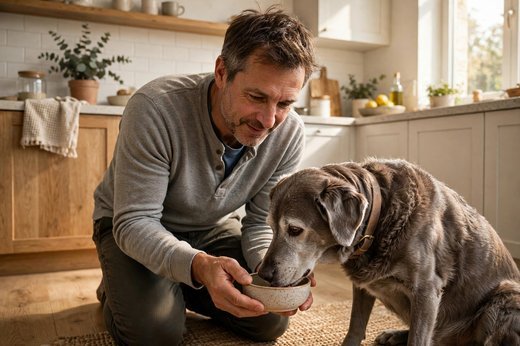
Choosing a soft dog food for senior dogs isn’t complicated. Figure out why he’s struggling — usually teeth or nose — then pick the texture that fits: canned for ease, softened kibble for budget, fresh food for maximum appeal.
Read the label like you mean it. Transition slowly. Warm it up a little. And when in doubt, let your vet take a peek inside that mouth — the kindest thing you can do for an old dog who loves his dinner is make sure eating doesn’t hurt.
He’s given you years of happy mealtimes. Returning the favor with a bowl that’s easy on his old teeth? That’s the least we can do.