Table of Contents
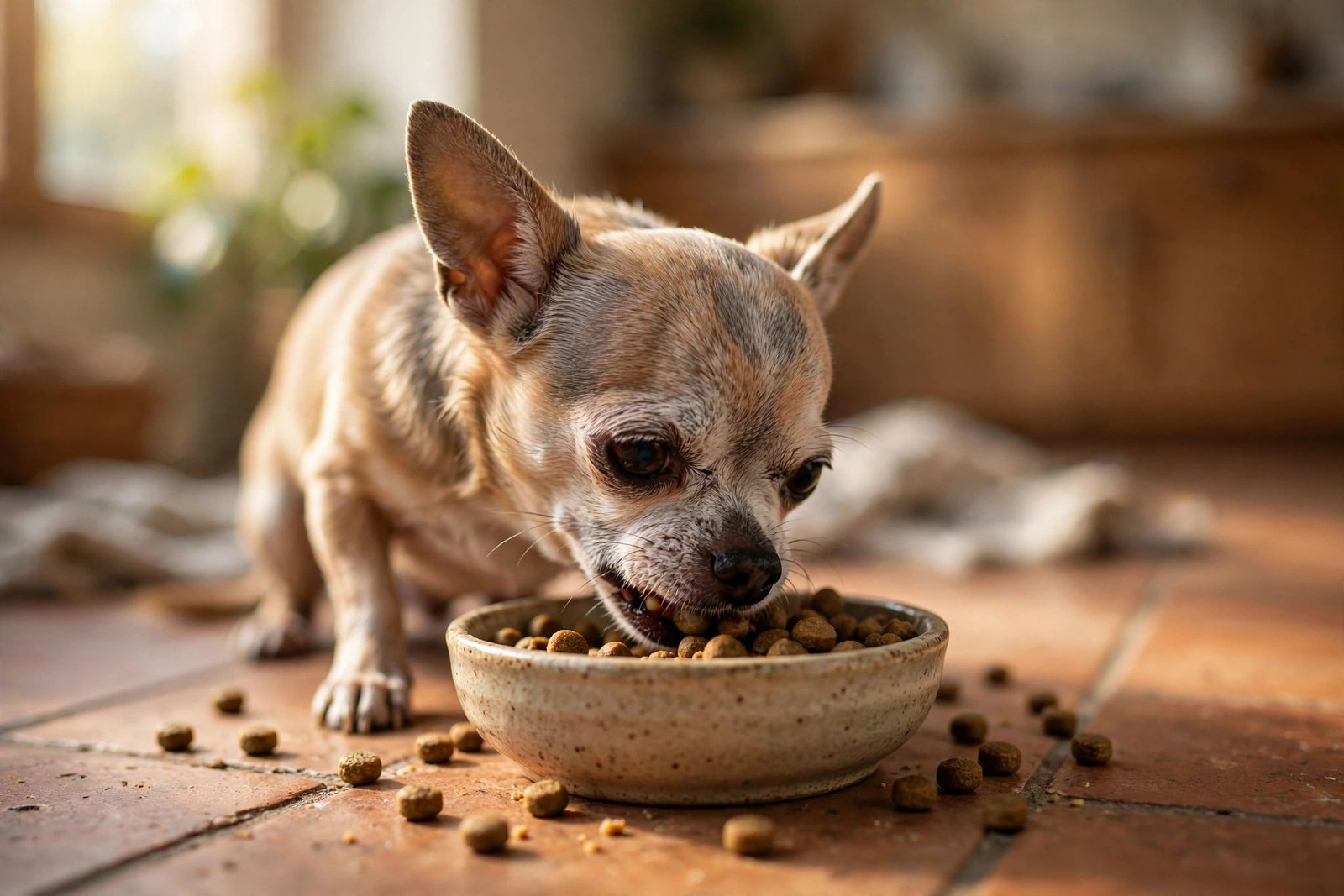
There’s a particular kind of heartbreak in watching a tiny dog get old. One day your chihuahua is bouncing off the furniture like a caffeinated squirrel, and the next you notice she’s hesitating before the couch jump she used to make in her sleep. The muzzle goes gray. The naps get longer. And suddenly the food you’ve been pouring into her bowl for years might not be doing her any favors anymore.
Here’s the thing most people miss: feeding a senior small dog isn’t just about buying a smaller bag of the same stuff. Small breed senior dog food is genuinely different from regular senior formulas, and getting it right can buy your little dog more comfortable years. Let me walk you through what actually matters — no jargon, no scare tactics.
When Does a Small Dog Actually Become a Senior?
Small dogs play by different rules than big ones, and aging is where it shows most. A Great Dane is considered senior at around six. Your dachshund or shih tzu? Not until somewhere around ten to twelve. Small breeds simply live longer — it’s common for a chihuahua to see sixteen or seventeen — so their “senior” chapter starts later but can stretch on for years.
That long runway is exactly why diet matters so much for them. A large dog’s senior years might last three or four years. A small dog’s can last six, seven, even eight. That’s a lot of meals, and small nutritional mistakes compound over time in a ten-pound body in ways they don’t in an eighty-pound one.
So if your little dog is pushing ten and you’ve been wondering whether it’s time to switch, the answer is: probably yes. And if you’re still choosing the right diet for your old dog, start with the senior question first — age changes the whole equation.
Why Small Breed Senior Dog Food Isn’t Just Smaller Kibble
I hear this a lot: “Can’t I just feed less of the regular stuff?” Technically your dog won’t keel over. But here’s what makes little old dogs different under the hood.
Their metabolism runs hot. Small breeds burn calories faster per pound than big dogs — that’s been true their whole lives. But in the senior years, that fast engine starts to sputter. Muscle mass drops, activity drops, and suddenly the calorie-dense food that kept a young terrier fueled starts padding the waistline instead. Senior small breed dog food threads this needle: enough energy for that quick metabolism, but fewer overall calories than adult formulas.
Their teeth are a disaster waiting to happen. If there’s one thing small senior dogs are famous for, it’s dental problems. Crowded little mouths, tartar buildup, gums that recede with age. By twelve, a shocking number of small dogs have lost teeth or are dealing with sore mouths. Food texture genuinely matters here in a way it doesn’t for a big dog with jaws like a vise.
Blood sugar swings hit them harder. Tiny dogs have tiny reserves. A missed meal or a food that’s mostly filler can leave an old chihuahua shaky and lethargic in a way you’d never see in a labrador. Steady, quality nutrition matters more when there’s less margin for error.
Their joints take a beating too. Dachshunds and their long backs, shih tzus with their knees — small doesn’t mean sturdy. The right senior formula supports joints before problems start, not after.
This is why grabbing a generic “senior” bag off the shelf and calling it done sells your dog short. Senior dog food for small breeds is formulated around these exact quirks.

What to Look for on the Label
Dog food labels are designed to confuse you. Bright packaging, a wolf on the front, words like “ancestral” and “holistic” that mean absolutely nothing legally. Ignore the front. Flip the bag over. Here’s what actually counts for a senior small dog food:
Named animal protein first. The first ingredient should be something like “chicken,” “turkey,” or “salmon” — not “meat meal” or “animal by-products.” Older dogs lose muscle faster, and quality protein is what slows that down. You don’t need sky-high protein percentages, but the protein that’s there should come from real meat.
Moderate fat, not low fat. Senior formulas sometimes go overboard cutting fat, which leaves the food tasting like cardboard and your dog losing interest. Old small dogs can be picky enough already. Look for moderate fat from named sources like chicken fat or fish oil — and those omega fatty acids do double duty for aging skin and coats.
Fiber for the slowing gut. Senior digestion gets sluggish. A little extra fiber — from things like beet pulp, pumpkin, or sweet potato — keeps things moving without you having to think about it.
Joint support in the recipe. Glucosamine and chondroitin on the ingredient list are a good sign. They won’t rebuild a worn-out knee, but for a dachshund who’s still doing stairs, every bit of support helps.
The AAFCO statement. This is the one line most people skip and shouldn’t. Look for a statement that the food meets AAFCO nutrient profiles for adult maintenance (or all life stages). It’s the closest thing the pet food world has to a quality baseline, and you can read more about what those profiles mean at aafco.org. If a bag doesn’t carry it, put the bag back.
Kibble size you can actually see. This sounds silly until you watch a thirteen-year-old shih tzu with three missing teeth try to crunch a marble-sized kibble. Small-breed formulas use genuinely smaller pieces. If you’re buying in person, look through the little window on the bag or ask for a sample.
How Much Should You Feed a Little Old Dog?
This is where small-dog owners get into the most trouble, because the numbers are unforgiving. Being two ounces over per meal means nothing to a retriever. For a nine-pound senior chihuahua, it’s the difference between healthy and obese within a few months — and extra weight on arthritic little joints is miserable.
Start with the feeding guide on the bag, then adjust down if your dog is more couch than cardio these days. Most senior small dogs do best on two smaller meals a day rather than one big one — it keeps blood sugar steadier and is easier on an older stomach. If your dog grazes and self-regulates (some do, bless them), you can leave food down, but measure the daily total so you actually know what “grazing” means.
Watch the waist, not the bowl. You should be able to feel ribs under a light layer of fat but not see them. If the waistline is disappearing, cut back by about ten percent and reassess in two weeks. Slow adjustments beat crash diets every time, especially in old dogs.
And treats count. Those little training treats and table scraps add up fast in a small body. Keep treats to roughly ten percent of daily calories, and if your senior has taken to begging with those ancient, cloudy eyes — well, switch to tiny low-calorie treats and nobody has to feel guilty.
Wet, Dry, or a Mix?
There’s no single right answer, but for senior small breeds the question matters more than usual.
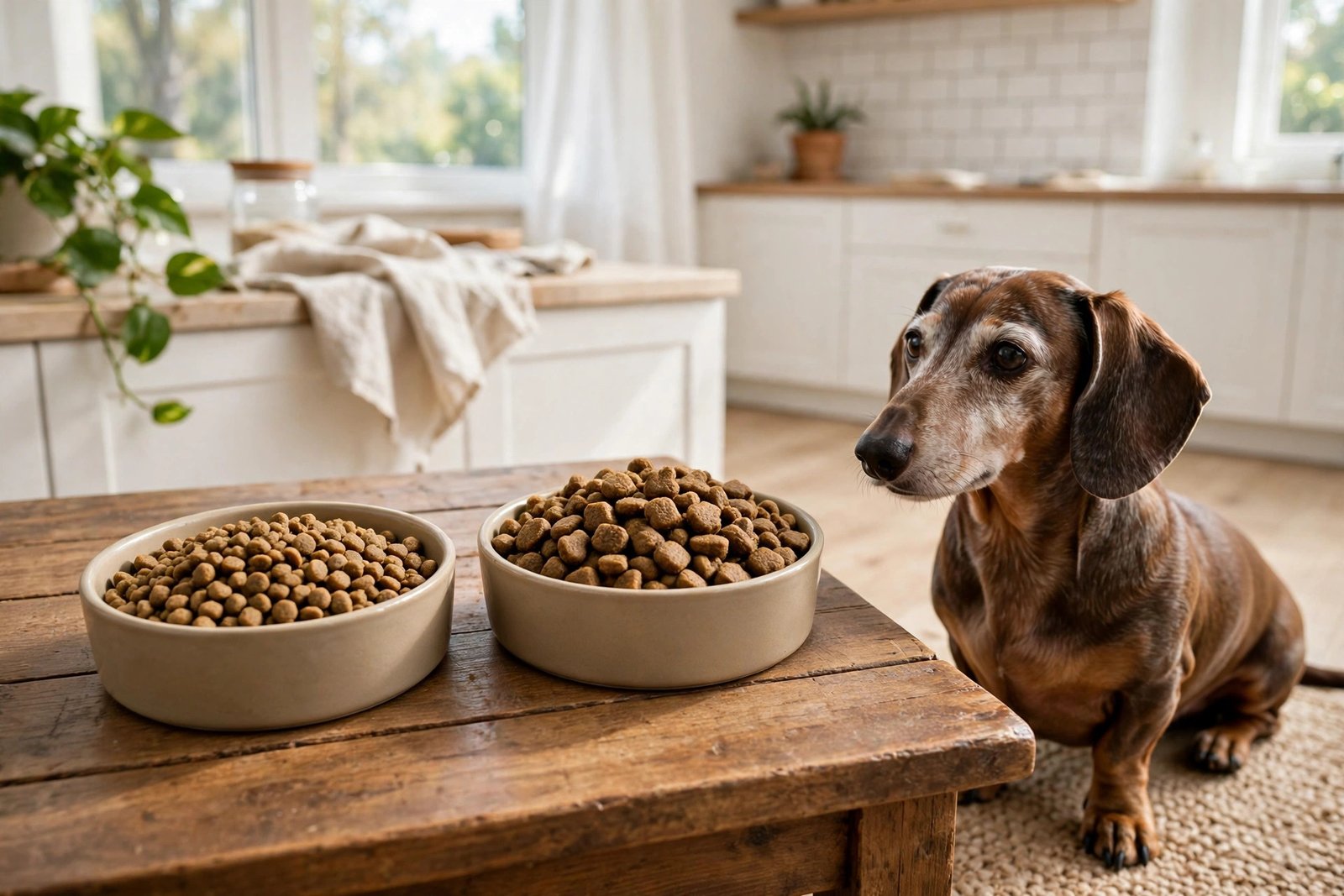
Dry kibble helps with tartar and is convenient, but only if your dog can actually chew it. Small-breed senior kibble exists for a reason — the pieces are sized for little mouths. If your dog is dropping kibble, chewing on one side, or walking away from the bowl, the pieces might be too big or her mouth might hurt. That’s a vet conversation, not a food-brand conversation.
Wet food is easier to eat, smells stronger (great for seniors whose sense of smell is fading), and sneaks in extra hydration — older dogs, especially small ones, don’t always drink enough. The downside is it does nothing for teeth and costs more per calorie.
The mix is what a lot of experienced small-dog owners land on: mostly kibble for the teeth and the wallet, with a spoonful of wet food on top for smell, taste, and moisture. If your dog is getting picky — and old small dogs get picky — warming the wet portion for a few seconds can make it irresistible.
When you’re comparing options, our rundown of the best dog foods for older dogs covers how the top formulas stack up beyond just the small-breed aisle.
Mistakes I See Small-Dog Owners Make
After years around little old dogs, the same patterns keep showing up. See if any of these sound familiar:
Feeding puppy or “all life stages” food forever. All-life-stages formulas are built for growth — too calorie-dense and mineral-heavy for a twelve-year-old. Switch to a senior formula and stop paying for nutrients she doesn’t need.
Eyeballing portions. “About a scoop” is how small dogs get fat. A kitchen scale or a proper measuring cup takes ten seconds and removes all the guesswork. This single habit probably matters more than which brand you buy.
Ignoring dental pain. If your senior suddenly won’t eat dry food she used to love, don’t just switch to wet food and move on — get the mouth checked. Bad teeth are fixable, and dogs are absurdly good at hiding mouth pain.
Switching foods cold turkey. Old digestive systems protest sudden changes loudly. Transition over seven to ten days, mixing increasing amounts of the new food in. Boring advice. Extremely effective.
Assuming “senior” on the label means appropriate. Marketing words aren’t regulated the way you think. A bag that screams “SENIOR” in giant letters but lists corn as the first ingredient is still corn. The ingredient list tells the truth; the front of the bag tells a story.
Frequently Asked Questions
What is the best food for a senior small breed dog?
There’s no single winner — the best senior small dog food is one with named animal protein first, moderate fat, added fiber, joint-supporting ingredients, small kibble size, and an AAFCO statement for adult maintenance. Match the formula to your individual dog: a chubby thirteen-year-old needs something different from a lean, active ten-year-old.
How often should I feed my senior small dog?
Twice a day works best for most little seniors — morning and evening, roughly twelve hours apart. Two smaller meals keep blood sugar steadier than one large one, which matters more in tiny bodies. If your vet has prescribed otherwise for a specific condition, follow that instead.
Can senior small dogs eat regular adult dog food?
They can survive on it, but it’s not ideal long-term. Adult formulas are typically higher in calories and don’t account for slowing metabolisms, joint wear, or dental decline. If your small dog is ten or older, a senior formula is a meaningful upgrade, not a marketing gimmick.
Should I switch to wet food if my old small dog won’t eat kibble?
First, rule out mouth pain with a vet visit — appetite loss in seniors deserves a checkup, not just a menu change. If the mouth is fine and it’s just fussiness or a fading sense of smell, mixing wet food into kibble (or warming it slightly) usually does the trick without abandoning dry food entirely.

The Bottom Line
Your little dog spent a decade being tougher than she had any right to be. The least we can do is feed her like the senior she is: quality protein to hold onto muscle, sensible calories for a slowing metabolism, kibble she can actually chew, and portions measured like they matter — because at nine pounds, they really do.
You don’t need the most expensive bag on the shelf. You need the right bag, fed in the right amount, with an eye on the dog in front of you rather than the marketing on the front. Do that, keep up with vet checkups, and those gray-muzzled years can be some of the sweetest ones you’ll share.
If anything in this article made you wonder about your own dog’s diet — a sudden appetite change, unexplained weight loss, or trouble chewing — that’s a conversation for your veterinarian, not a blog post. This guide is a starting point, not a diagnosis.
1 thought on “Small Breed Senior Dog Food: What Your Little Old Dog Needs”