
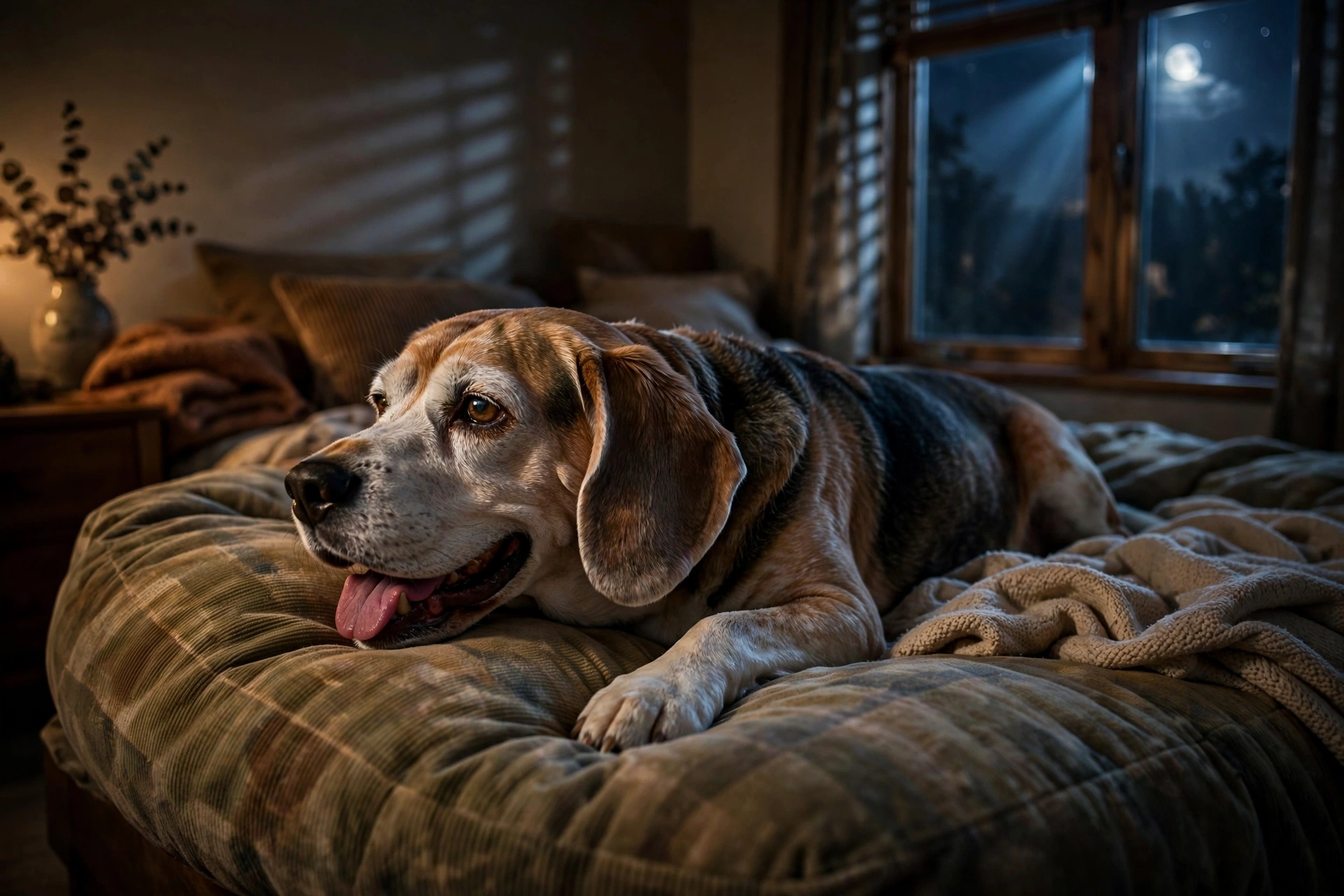
It’s 2 AM. The house is quiet, everyone’s asleep — except your old dog, who’s lying on their bed panting like they just finished a marathon. No heatwave, no excitement, no obvious reason. Just that rapid, restless breathing in the dark.
If you’re searching “why is my senior dog panting at night,” you’re not alone. Nighttime panting is one of the most common worries among owners of aging dogs, and it’s one of those symptoms that can mean anything from “a bit uncomfortable” to “needs a vet visit soon.” Let’s break down what’s actually going on, when to worry, and what you can do about it.
Is Nighttime Panting Normal in Senior Dogs?
Here’s the honest answer: occasional light panting can be normal, especially in older dogs. As dogs age, their bodies become less efficient at regulating temperature, and they may pant more easily than they used to. A few minutes of gentle panting after settling into bed isn’t usually cause for alarm.
But persistent, heavy, or nightly panting is not “just old age.” When your senior dog pants heavily at night on a regular basis — particularly if it’s new behavior — something is making them uncomfortable. Dogs don’t pant at rest for no reason. Your job is to figure out whether that reason is minor or medical.
7 Common Reasons Your Old Dog Pants at Night
1. Pain — Especially Arthritis
This is the number one cause of nighttime panting in senior dogs, and it’s the one most owners miss. Arthritis pain often gets worse at night: the dog has been lying still for hours, joints stiffen up, and every small position change hurts. Panting is one of the primary ways dogs express pain — they can’t tell you their hips ache, so they breathe hard instead.
Clues it’s pain-related: your dog pants more after lying down for a while, struggles to get up, is stiff in the mornings, or pants when changing positions. If your dog is over 8 (or over 6 for large breeds), arthritis should be your first suspicion.
2. Canine Cognitive Dysfunction (Dog Dementia)
Dogs get dementia too — it’s called canine cognitive dysfunction (CCD), and it affects a large share of dogs over 11. One of its hallmark symptoms is sundowning: confusion and restlessness that gets worse in the evening and at night. Affected dogs pace, whine, stare at walls, and pant — often for no apparent reason.
Clues it’s CCD: panting combined with pacing, getting “stuck” in corners, disrupted sleep cycles (awake all night, asleep all day), or forgetting housetraining. If your senior dog seems confused along with the panting, mention CCD to your vet specifically — it’s underdiagnosed.
3. Heart Disease
The heart is a muscle, and like every muscle, it weakens with age. When a senior dog’s heart can’t pump efficiently, fluid can build up around the lungs, making breathing harder — especially when lying flat at night. Panting is the dog’s way of compensating.
Clues it’s heart-related: panting combined with coughing (especially a soft cough at night or after lying down), getting tired on walks they used to handle easily, or a swollen belly. Heart disease is serious but very manageable when caught early, so don’t delay a vet visit if you see these signs together.
4. Cushing’s Disease
Cushing’s disease (hyperadrenocorticism) is common in older dogs — it means the body produces too much cortisol. Excessive panting is one of its classic symptoms, along with increased thirst, increased appetite, a pot-bellied appearance, and thinning hair. Many owners chalk the panting up to age for months before getting a diagnosis.
Clues it’s Cushing’s: panting plus drinking noticeably more water, needing to urinate more often (including accidents), and weight gain around the belly despite no diet change.
5. Anxiety and Stress
Senior dogs can develop anxiety they never had as youngsters. Hearing loss, vision decline, and cognitive changes make the world feel less predictable, and nighttime — dark, quiet, everyone asleep — can feel unsettling. Some dogs also develop separation anxiety in old age and pant when left alone in another room at night.
Clues it’s anxiety: panting that started after a change (a move, a lost companion animal, a new schedule), or panting that stops when you’re nearby and restarts when you leave the room.
6. Overheating
Before assuming the worst, check the obvious: is your dog simply too warm? Senior dogs regulate body temperature less efficiently, thick-coated breeds suffer more, and a warm bedroom with heavy blankets can be too much. Dogs don’t sweat — panting is their air conditioning.
Quick test: cool the room, offer fresh water, and see if the panting eases within 20–30 minutes. If it does, heat was likely the culprit.
7. Breathing Problems (Including Laryngeal Paralysis)
Older large-breed dogs (Labradors especially) are prone to laryngeal paralysis — the muscles controlling the airway weaken, making breathing noisy and labored. It often shows up as loud panting or raspy breathing that worsens with excitement, heat, or lying in certain positions.
Clues: noisy, harsh breathing rather than normal panting sounds, a change in bark tone, or gagging/coughing while eating or drinking.
Red Flags: When Nighttime Panting Is an Emergency
Most nighttime panting warrants a vet visit within days — but some signs mean go now, don’t wait until morning:
- Labored breathing (you can see real effort in the belly or chest)
- Blue, gray, or pale gums or tongue
- Panting combined with collapse, staggering, or inability to stand
- A swollen, hard, or painful belly (possible bloat — life-threatening)
- Panting with heavy drooling and extreme restlessness
- Breathing rate over 40 breaths per minute at complete rest
If you’re unsure, call your vet or an emergency animal hospital and describe what you see. They’d rather get a midnight call than a morning emergency.
What You Can Do Tonight
While you arrange a vet visit, here’s how to make tonight more comfortable for your senior dog:
- Cool the room. Aim for 68–72°F (20–22°C). A fan for air circulation helps — just don’t point it directly at them.
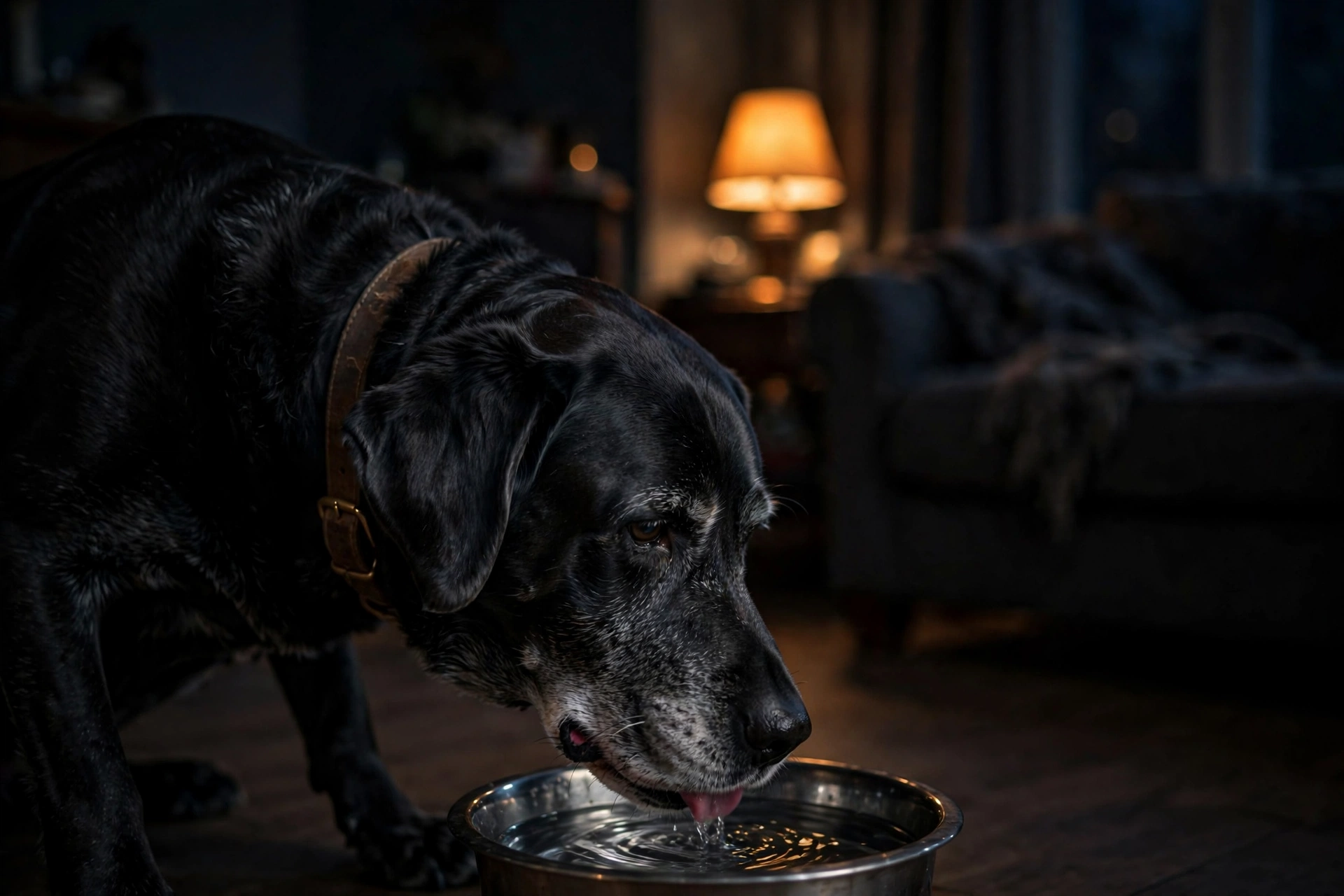
- Fresh, cool water nearby. Dehydration makes everything worse, and some conditions causing panting also increase thirst.
- A supportive bed in a quiet spot. An orthopedic bed eases arthritic joints. Some anxious dogs settle better sleeping in the same room as you.
- Note the details. What time did the panting start? How heavy? Any coughing, pacing, or whining with it? This log is gold for your vet.
- Don’t scold or fuss excessively. Keep things calm — your anxiety transfers straight to them.
How Your Vet Will Figure Out the Cause
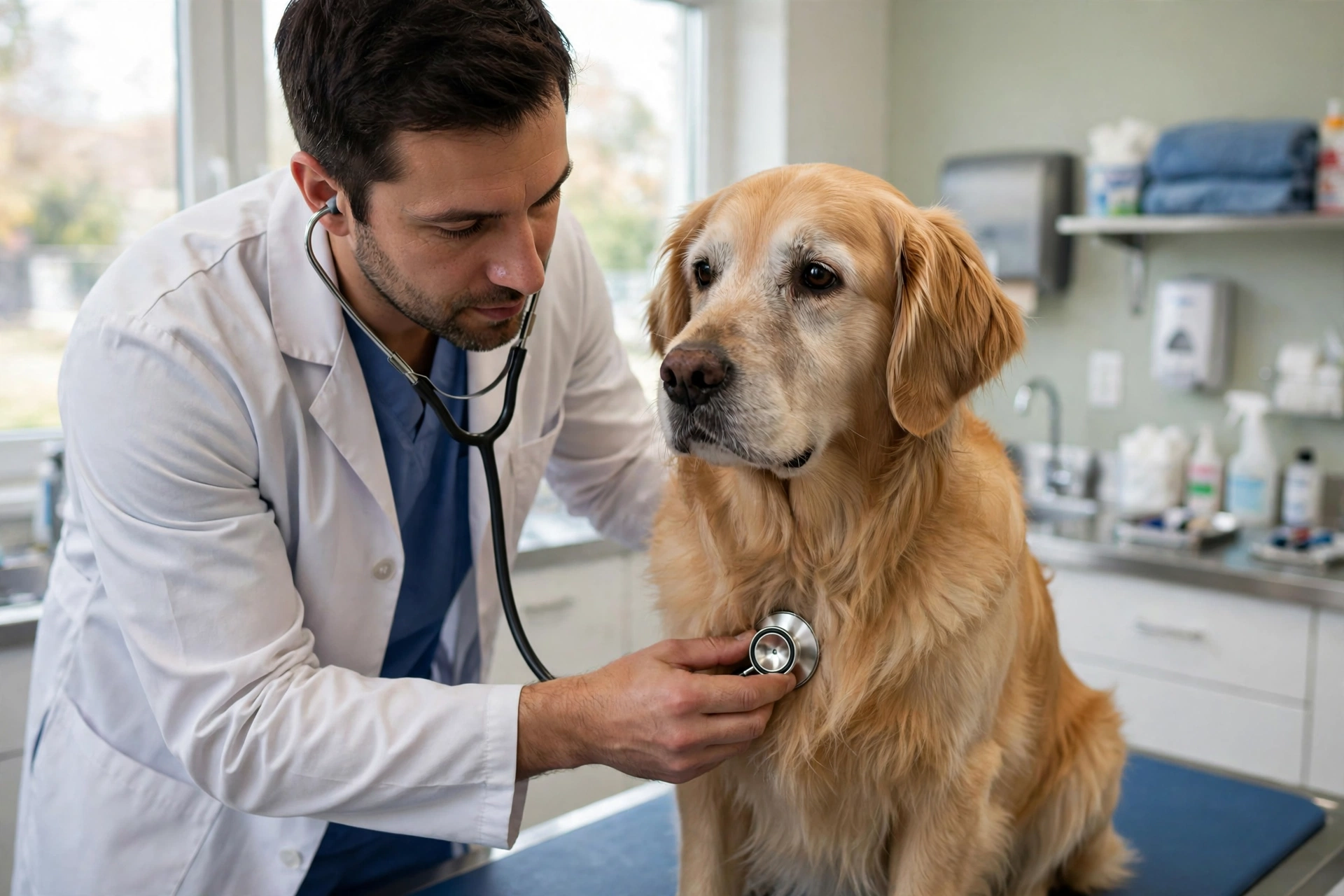
Expect your vet to start with a thorough physical exam and a good history (this is where your notes help). Depending on what they find, diagnostics may include bloodwork (to check for Cushing’s, kidney, and liver issues), chest X-rays (heart and lungs), blood pressure measurement, and possibly an echocardiogram if heart disease is suspected. Most causes of nighttime panting are diagnosable — and many are very treatable once identified.
For a broader overview of keeping your aging companion comfortable, the AVMA’s senior pet care guide is a solid reference worth bookmarking.
Frequently Asked Questions
Why does my senior dog pant and pace at night?
Panting combined with pacing at night most often points to pain (arthritis), canine cognitive dysfunction (sundowning), or anxiety. If both are new behaviors in a senior dog, schedule a vet visit — pain management alone transforms many of these dogs’ nights.
Should I worry if my old dog pants while sleeping?
Light, brief panting during dreams (with twitching paws — they’re probably chasing squirrels) is normal. But heavy, sustained panting while sleeping, especially if it’s new, deserves attention. Sleeping dogs should breathe slow and easy.
Can anxiety cause panting at night in dogs?
Absolutely. Senior dogs are prone to nighttime anxiety from vision/hearing loss, cognitive decline, or routine changes. If panting stops when you’re close and the vet finds nothing medical, anxiety is a likely contributor — and there are good management strategies for it.
How can I help my senior dog sleep better at night?
Keep a consistent bedtime routine, ensure they empty their bladder right before bed, provide an orthopedic bed in a cool quiet room, and consider a calming supplement (ask your vet first). Regular gentle daytime exercise — not overtiring — also promotes better sleep.
Disclaimer: This article is for informational purposes only and isn’t a substitute for professional veterinary advice. If your senior dog’s panting is severe, sudden, or accompanied by other symptoms, contact your veterinarian promptly.