
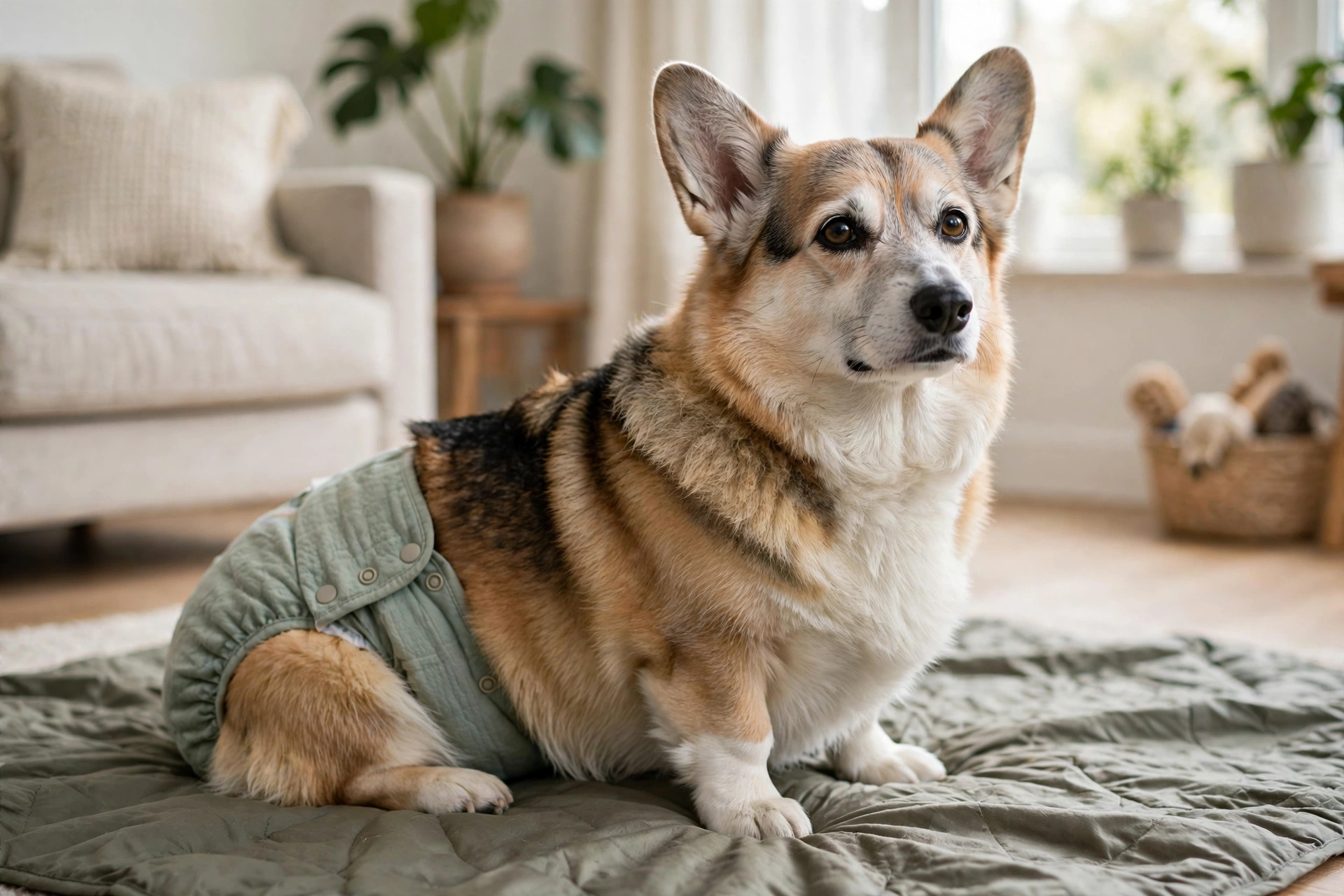
You walk into the living room and find a wet spot on your old dog’s bed. Again. Your dog looks up at you with those cloudy old eyes — not guilty, just confused. Maybe a little embarrassed.
Here’s what you need to hear first: it’s not their fault, and it’s not bad behavior. Incontinence — losing bladder control without realizing it — is one of the most common issues in senior dogs, and it’s almost always medical, not behavioral. Your dog isn’t “forgetting” their training to spite you. Their body is changing.
The good news? Incontinence in old dogs is one of the most manageable senior-dog problems there is. Between vet treatments and a few practical home adjustments, most families get it fully under control. This guide covers both.
Why Does Incontinence Happen in Senior Dogs?
“Old age” isn’t a diagnosis — there’s always a specific mechanism behind the leaking. Knowing which one matters, because treatments differ.
Weak Bladder Sphincter (Urethral Sphincter Mechanism Incompetence)
The most common cause, especially in spayed female dogs. The muscle that holds the bladder closed weakens with age and hormonal changes, so urine leaks out — typically while the dog is sleeping or lying down. They often don’t even wake up. The good news: this responds very well to medication.
Hormonal Changes
Estrogen helps maintain bladder muscle tone in females, which is why spayed middle-aged and senior females are the classic incontinence patients. (Males get it too, just less often.)
Urinary Tract Infections (UTIs)
Senior dogs — especially females — get UTIs more easily due to weaker immune systems. A UTI causes urgency, frequent small accidents, and sometimes cloudy or strong-smelling urine. Unlike age-related sphincter weakness, UTIs come on relatively suddenly and are curable with antibiotics.
Kidney Disease and Diabetes
Both conditions make dogs drink and urinate far more than normal. A senior dog with kidney disease may simply produce more urine than their bladder can hold overnight — that’s overflow, not true incontinence, but it looks the same on your rug. Increased thirst is the telltale clue here.
Canine Cognitive Dysfunction
Dog dementia can make a housetrained dog genuinely forget to signal or forget where the door is. If accidents come with confusion, pacing, or sleep disruption, CCD may be part of the picture.
Medications
Steroids (like prednisone), some heart medications, and diuretics increase thirst and urine output. If leaking started shortly after a new prescription, tell your vet — the timing is rarely a coincidence.
Step One: See Your Vet (Don’t Skip This)
I know it’s tempting to go straight to dog diapers, but a vet visit comes first — because several causes of incontinence are treatable or curable:
- UTIs clear up with antibiotics
- Sphincter weakness often resolves with daily medication (phenylpropanolamine or estrogen-based treatments work for the majority of dogs)
- Kidney disease and diabetes need diagnosis and management — catching them early changes outcomes
Expect a urinalysis at minimum, plus bloodwork if your vet suspects kidney issues or diabetes. Bring notes: when did the leaking start? During sleep or while awake? Any increase in thirst? These details point your vet straight to the cause.
Everyday Management That Actually Works
While you’re working with your vet (or alongside treatment), these practical steps keep your home and your dog comfortable:
Dog Diapers and Belly Bands
Modern washable dog diapers are nothing like the awkward contraptions of the past — they’re soft, stay on well, and save your furniture. Key tips:
- Females need full diapers; males usually do fine with belly bands (a wrap that goes around the waist)
- Change them every few hours — sitting in a wet diaper causes skin irritation and UTIs
- Washable/reusable ones are cheaper long-term and more comfortable than disposables
- Measure your dog properly — too loose leaks, too tight chafes
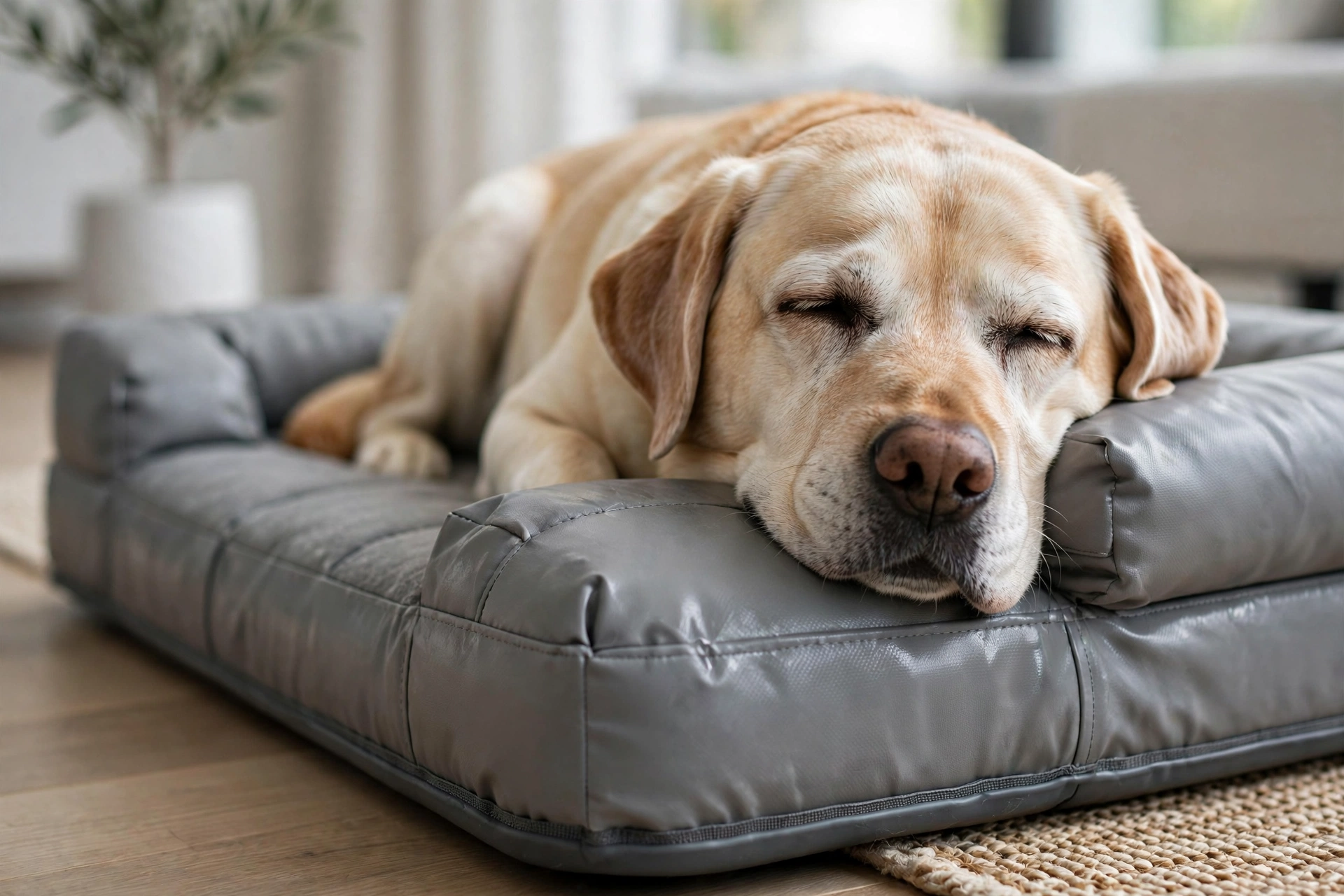
Waterproof Bedding and Washable Pee Pads
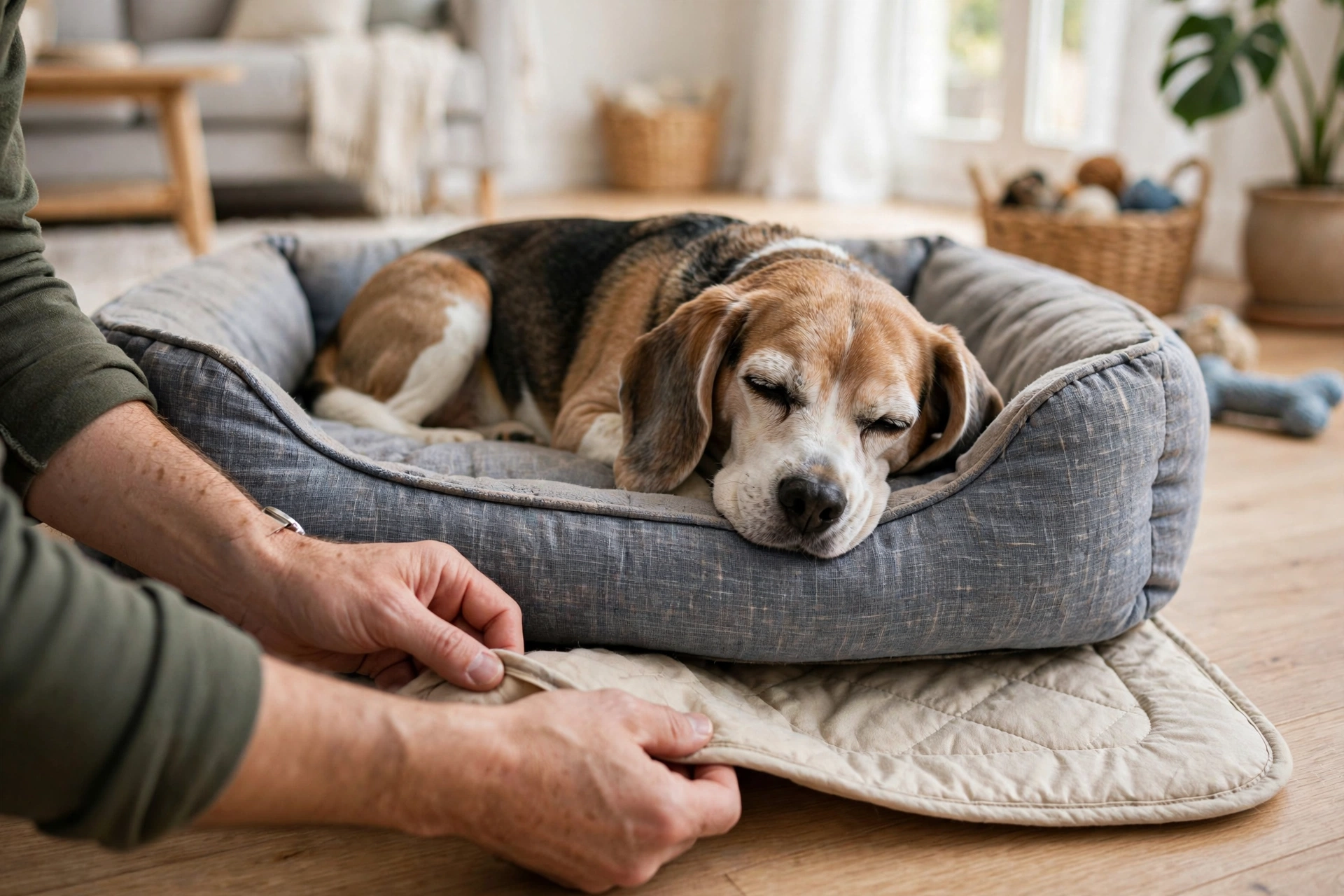
Layer your dog’s sleeping area: waterproof mattress protector under their bed, plus washable pee pads on top. When there’s an accident, you toss the pad in the wash instead of scrubbing a whole bed. Keep two sets so one is always clean.
More Frequent Potty Breaks
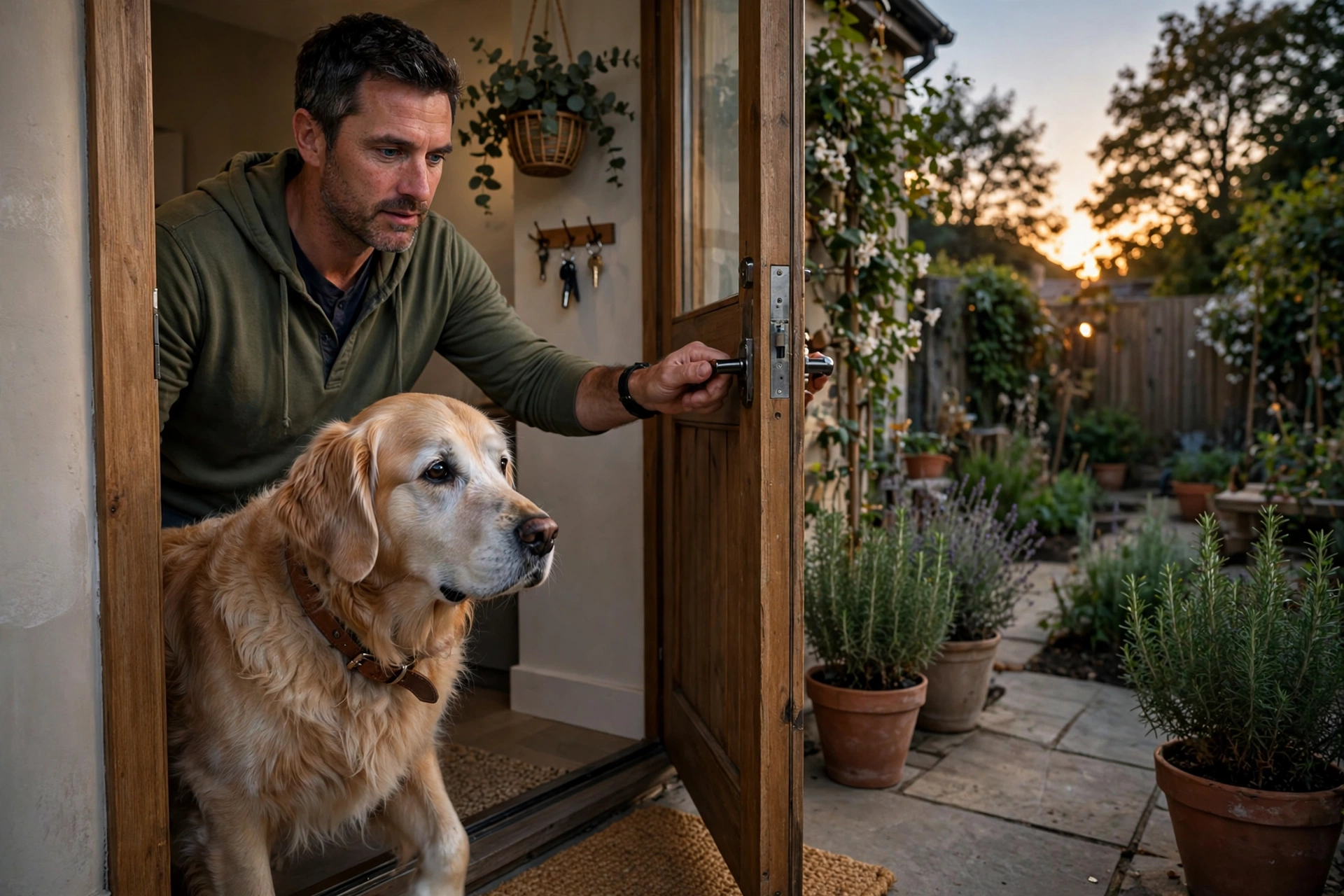
The simplest fix is often the most effective. A senior bladder can’t hold it for 8 hours anymore. Add a mid-day break if you’re away, and always take them out right before bed — plus once during the night if needed. Many “incontinence” cases improve dramatically just by shortening the interval.
Diet and Water — Don’t Restrict Water!
Never limit your senior dog’s water to reduce accidents. Dehydration is dangerous for older dogs and worsens kidney problems. If your vet hasn’t said otherwise, water stays available always. (If excessive thirst is the issue, that’s a symptom to investigate — not to manage by withholding water.)
Cleaning Up: Remove Stains and Smell for Good
Regular cleaners mask odor to human noses but not to dog noses — and any lingering urine smell encourages repeat accidents in the same spot. Use an enzymatic pet-urine cleaner (the enzymes actually break down the urine compounds rather than covering them). Soak the spot, let it sit the full recommended time, then blot. For mattresses and upholstery, a waterproof cover prevents the problem in the first place.
What Never to Do
- Never punish accidents. Your dog can’t control it — scolding only creates anxiety, which can actually worsen leaking.
- Never restrict water (unless your vet specifically instructs it for a short diagnostic period).
- Don’t assume it’s “just old age” and skip the vet. Treatable causes are common, and medication helps most dogs enormously.
- Don’t use diapers as the only solution without investigating the cause — they’re management, not treatment.
When to Call the Vet Again
Incontinence management isn’t “set and forget.” Call your vet if: leaking suddenly worsens, urine looks bloody or very dark, your dog strains to urinate, there’s a strong new odor, or a previously effective medication seems to stop working. Senior dogs’ needs change — treatments sometimes need adjusting.
Frequently Asked Questions
Is incontinence a reason to put a dog down?
Almost never on its own. Incontinence is manageable and doesn’t cause suffering when handled properly — most incontinent senior dogs are happy, comfortable, and live full lives. Euthanasia discussions only enter the picture when incontinence comes with severe, untreatable illness or total loss of quality of life.
Do dog diapers actually work for incontinence?
Yes — they’re the single most effective management tool for most families. Washable diapers (or belly bands for males) catch leaks reliably when sized correctly and changed regularly. Most dogs accept them within a few days.
Can incontinence in old dogs be cured?
It depends on the cause. UTIs are curable. Sphincter weakness is highly treatable with medication (though usually lifelong). Kidney disease and diabetes are manageable but not curable. That’s why the vet visit matters — “incontinence” isn’t one condition.
Why is my senior dog leaking urine while sleeping?
Leaking during sleep is the classic sign of urethral sphincter mechanism incompetence — the bladder valve relaxes too much during deep sleep. It’s the most common pattern in senior spayed females and typically responds well to prescription medication. Mention the sleep-leaking pattern to your vet specifically.
Disclaimer: This article is for informational purposes only and isn’t a substitute for professional veterinary advice. If your senior dog’s incontinence is sudden, bloody, or accompanied by straining or lethargy, contact your veterinarian promptly.