
Table of Contents
Walk into any pet store and you’ll find an entire wall of bottles, chews, and powders all promising to turn back the clock for your aging dog. It’s overwhelming — and honestly, a lot of it is marketing noise. So let’s cut through it.
When people ask me about the best supplements for senior dogs, my first answer is always the same: there’s no magic pill. But there are a handful of supplements with genuinely reasonable track records, and knowing which ones are worth your money (and which aren’t) can make a real difference in your old dog’s day-to-day comfort.
Here’s the honest breakdown — what may help, what to skip, and how to choose without getting played by fancy packaging.

Why Senior Dogs Sometimes Need a Little Extra Help
Aging changes how a dog’s body works. Joints get creaky. Digestion gets fussier. The immune system doesn’t bounce back the way it used to. That’s all normal — it’s just wear and tear.
A good senior diet covers most of the basics. But here’s the thing: older dogs sometimes don’t absorb nutrients as efficiently as they once did, and certain age-related changes (like cartilage breakdown in the joints) create needs that food alone doesn’t fully address. That’s the gap supplements are meant to fill.
Notice I said meant to. Supplements support the body — they don’t rebuild it, and they don’t replace veterinary care. Anyone who tells you a chew will “cure” your dog’s arthritis is selling you something. Keep that filter on for this whole article, and you’ll be fine.
Glucosamine and Chondroitin: The Joint Duo
If there’s one supplement category that comes up in nearly every conversation about aging dogs, it’s this one. Glucosamine and chondroitin are compounds involved in maintaining cartilage — the cushioning tissue in joints — and they’re the most widely used supplements for elderly dogs dealing with stiffness or slowing down on stairs.
What do they actually do? The honest answer is: the evidence is mixed but encouraging enough that many vets suggest trying them. Veterinary sources describe how glucosamine and chondroitin may support joint health in dogs, and plenty of owners report their dogs seem more comfortable after a few weeks of consistent use. It’s not an overnight thing — most vets say to give it four to six weeks before judging.
A few practical notes:
- Look for products made specifically for dogs, with dosing by weight on the label. Human joint supplements aren’t formulated the same way.
- MSM is often bundled in with glucosamine/chondroitin combos. It’s another compound some owners use for joint comfort — again, reasonable, not miraculous.
- Soft chews tend to go over better than giant tablets with senior dogs, especially ones with dental issues.
This is the one category where I’d say trying is reasonable for most stiff seniors — with your vet’s blessing, of course.
Omega-3 Fatty Acids: For Skin, Coat, and Overall Comfort
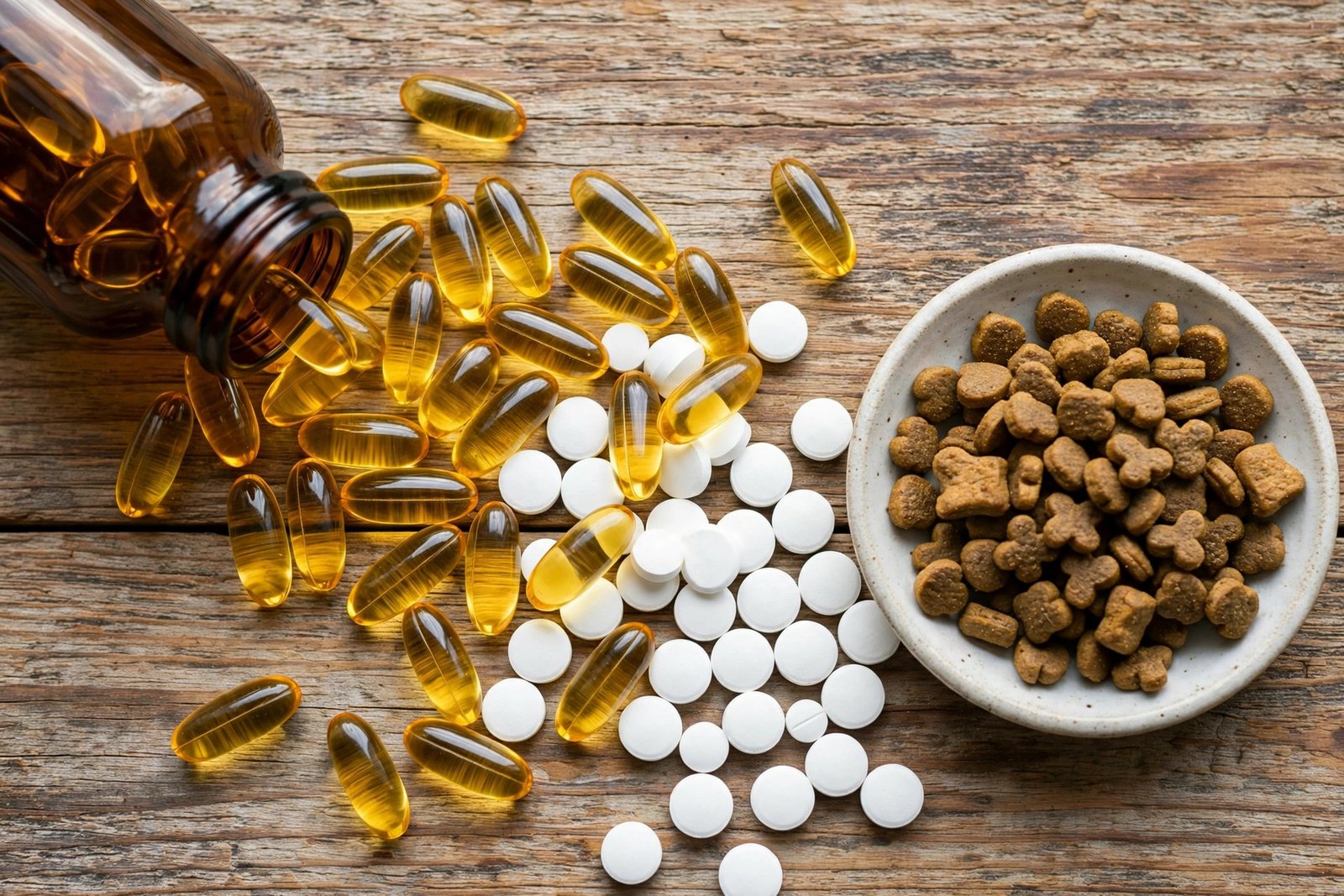
Fish oil is the quiet workhorse of the supplement world. Omega-3 fatty acids (mainly EPA and DHA) are best known for supporting skin and coat health — and any owner of an older dog with dry, flaky skin knows how much that matters.
Beyond the coat, omega-3s are often discussed in the context of general comfort and mobility in aging dogs. Some owners notice their dog seems a bit more at ease after a month or two of daily fish oil. It’s subtle, not dramatic — think “slightly better mornings” rather than “puppy again.”
Practical tips:
- Buy fish oil made for pets, or ask your vet about dosing if you use human capsules. Too much can cause digestive upset or interfere with blood clotting, so dosing matters.
- Store it properly. Rancid fish oil is worse than no fish oil — keep it cool, dark, and toss it if it smells strongly off.
- Capsules vs. liquid: liquid pump bottles are easier to dose onto food, but capsules stay fresher. Pick whichever you’ll actually use consistently.
Probiotics: Because Gut Health Matters at Every Age
Senior dogs and sensitive stomachs go together like rain and muddy paws. As dogs age, their digestive systems can get fussier — softer stools, gassiness, or just a general unpredictability that wasn’t there at age four.
Probiotics (beneficial bacteria for the gut) are one of the gentler things you can try. They’re commonly suggested during and after antibiotic courses, but some owners use them daily for seniors with chronically touchy digestion. The evidence in dogs is still developing, but the risk profile is low, which is why vets are generally comfortable with them.
What to know:
- Strain and CFU count matter, but don’t obsess — a reputable pet-specific probiotic with a clearly labeled strain is what you want.
- Give it time. Gut changes take two to four weeks to show.
- Yogurt isn’t a substitute. Plain yogurt has some live cultures, but nowhere near the concentration of a proper supplement — and dairy bothers plenty of dogs.
If your senior’s stomach has become a daily guessing game, this is a reasonable, low-drama place to start.
Multivitamins: Filling in the Nutritional Gaps
Here’s a question I hear a lot: if my dog eats a complete senior food, does he even need a multivitamin? Usually — no. A quality senior diet is already balanced, and that’s by design.
But there are exceptions, and they’re worth knowing about when you’re sorting through the best supplements for older dogs:
- Picky eaters who leave half their bowl behind day after day.
- Dogs on homemade diets that might not be fully balanced (this is a bigger deal than most people realize).
- Dogs with absorption issues — some seniors just don’t pull as much nutrition from food as they used to.
In those cases, a senior-specific multivitamin can help cover the gaps. Just don’t double up blindly: if the food is already fortified and you add a full multivitamin on top, some nutrients (like vitamin D) can actually reach excessive levels. More is not better with vitamins. When in doubt, bring the food label and the supplement label to your vet and ask.
One more distinction worth knowing: senior-specific formulas versus all-life-stages multis. Senior blends are usually adjusted for older dogs’ needs — a bit more of certain B vitamins, joint-support extras, sometimes added antioxidants — while all-life-stages products are formulated to be safe for everyone from puppies to seniors, which means they’re optimized for no one in particular. If you’re going to supplement, the senior-specific version is usually the more sensible pick. Just remember it still doesn’t replace a diet that’s actually complete on its own.
What to Look for on the Label (and What to Avoid)
This is the part that actually saves you money. The supplement aisle runs on hope and pretty packaging, so here’s how to read past it when you’re comparing the best dog supplements for older dogs:

Good signs:
- NASC seal (National Animal Supplement Council) — it means the company follows quality and labeling standards. Not a guarantee, but a meaningful filter.
- Clear dosing by weight — vague “give as needed” instructions are a red flag.
- Specific ingredient amounts — “glucosamine 500mg” beats “proprietary joint blend” every time. Proprietary blends hide how little of the good stuff is actually in there.
- Made for dogs — pet-specific formulation, not repackaged human pills.
Walk away when you see:
- Disease-curing claims — “cures arthritis,” “reverses aging,” “veterinarian miracle.” Supplements legally can’t claim to treat disease. Anyone who does is either ignorant or dishonest.
- No ingredient list or contact info — if you can’t find out what’s in it or who made it, that’s your answer.
- Miracle testimonials as the entire pitch — heartwarming stories are nice; they’re not evidence.
One more thing: price and quality don’t always track together. The most expensive bottle isn’t automatically the best, and the cheapest usually isn’t either. Mid-range products from established pet brands with transparent labels are the sweet spot.
And remember — supplements work alongside good nutrition, not instead of it. Getting the fundamentals right by choosing the right diet for your old dog will do more for your senior than any bottle on the shelf.
How to Introduce Supplements Without the Drama
Senior dogs can be suspicious of anything new — new food, new routine, and especially new pills. Here’s how to make it painless:
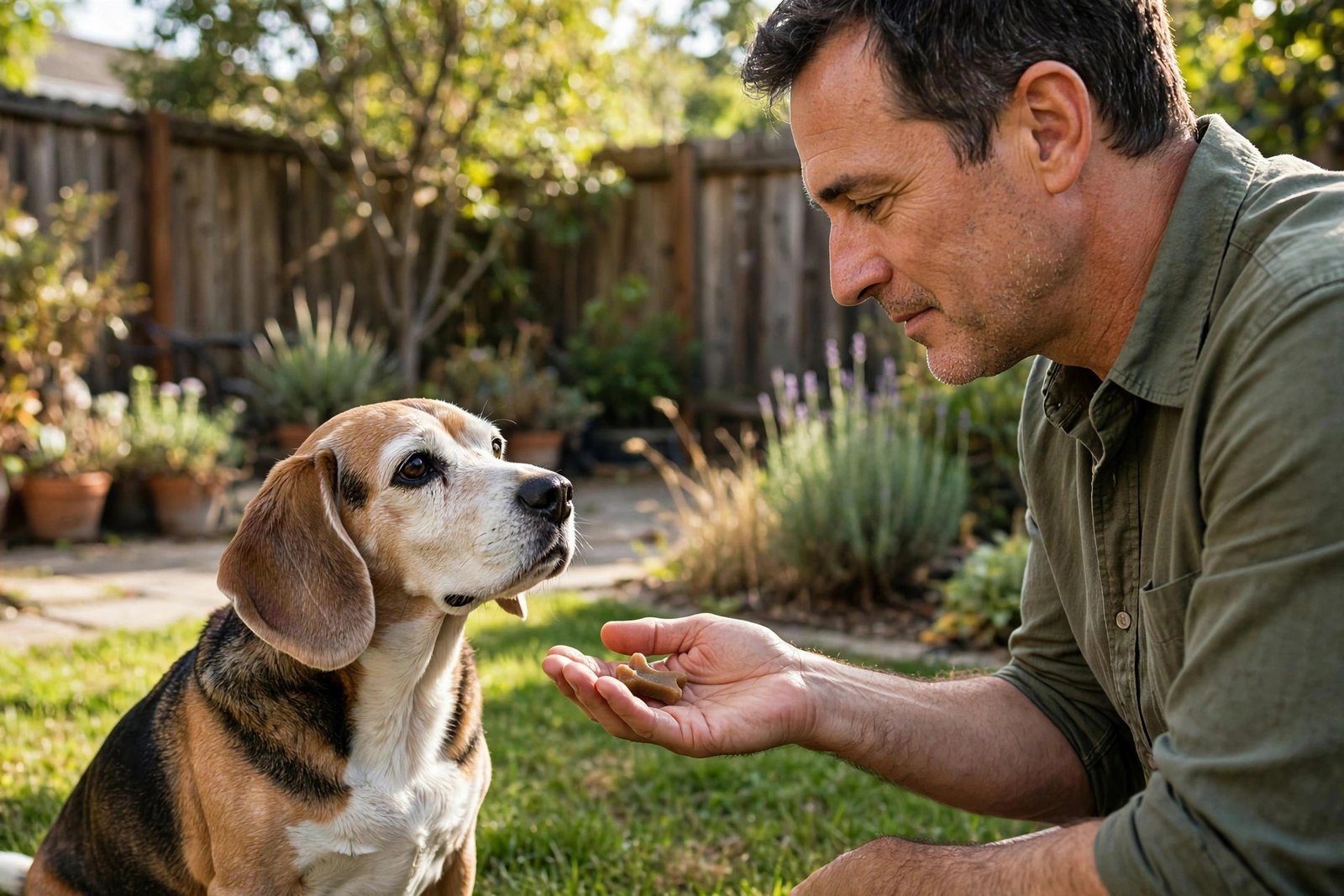
- Start with one supplement at a time. This is the golden rule. If you start three things at once and something disagrees with your dog (or something helps), you’ll have no idea which one did it. Two weeks apart is a sensible gap.
- Hide it in something delicious. A dab of peanut butter (xylitol-free — always check), a bit of plain pumpkin puree, or a pill pocket works for most dogs. For powders and liquids, mix into a small portion of wet food first so you know he ate the full dose.
- Watch the stool. I know, glamorous. But digestive upset is the most common side effect of new supplements, and the backyard tells you everything. Mild softness for a day or two can be normal; ongoing diarrhea means stop and call the vet.
- Keep a simple log. Just a notes app entry: what you started, when, and any changes you notice. After a month you’ll have actual data instead of vibes.
- Reassess every few months. Supplements aren’t lifetime sentences by default. If something clearly isn’t doing anything after a fair trial, stop paying for it.
A quick note on timing: most supplements need weeks, not days, to show anything. If a product promises results in 48 hours, that’s marketing, not biology.
Frequently Asked Questions
Do senior dogs really need supplements?
Not all of them. A healthy senior on a complete, balanced diet may not need anything extra. Supplements make the most sense for specific, observable needs — stiffness, flaky skin, touchy digestion — rather than as a blanket “he’s old, give him everything” approach. When you’re browsing the best dog foods for older dogs, you’ll notice good senior formulas already include some of these nutrients, which is another reason to check the food label before adding more.
Can I give my dog human supplements?
Generally, no — at least not without your vet’s say-so. Dosing, inactive ingredients, and even sweeteners differ. Xylitol (birch sugar), common in human gummies and chewables, is toxic to dogs. Pet-specific products exist for a reason.
How long before I know if a supplement is working?
For most joint and skin supplements, four to six weeks of consistent daily use. Probiotics: two to four weeks. If you see zero change after a fair trial, it’s okay to stop — not every dog responds to every supplement, and that’s normal.
Are there any supplements senior dogs should avoid?
Be cautious with anything containing iron in high doses, excessive vitamin D, or herbal blends with vague ingredients. And anything marketed with cure-type claims — that’s a marketing problem, not just a safety one. When in doubt, the shortest path is a five-minute call to your vet’s office.
The Bottom Line
The best supplements for senior dogs aren’t the ones with the flashiest labels — they’re the boring, well-made basics that match your individual dog’s actual needs. For most seniors, that shortlist is joint support (glucosamine/chondroitin), omega-3s for skin and coat, and possibly probiotics for a fussy gut. Everything else is case-by-case.
Start with what your dog is actually showing you — the stiff mornings, the flaky skin, the unpredictable stomach — pick one thing, give it a fair trial, and keep your vet in the loop. That’s it. No wall of bottles required.
Your old dog doesn’t need seventeen supplements. He needs the right one or two, good food, and you paying attention. You’re already doing the last part by reading this.
⚠️ Health note: This article is for informational purposes only and is not a substitute for professional veterinary advice. If your senior dog shows any worrying symptoms, please consult your veterinarian promptly.
1 thought on “Best Supplements for Senior Dogs: What Actually Helps”